NEW PSYCHONAUT

  • Anger is an NRG

    Anger is an NRG

      Medical
    Medical

    How to take a (small) step closer to the dark side for more assertiveness and self-compassion

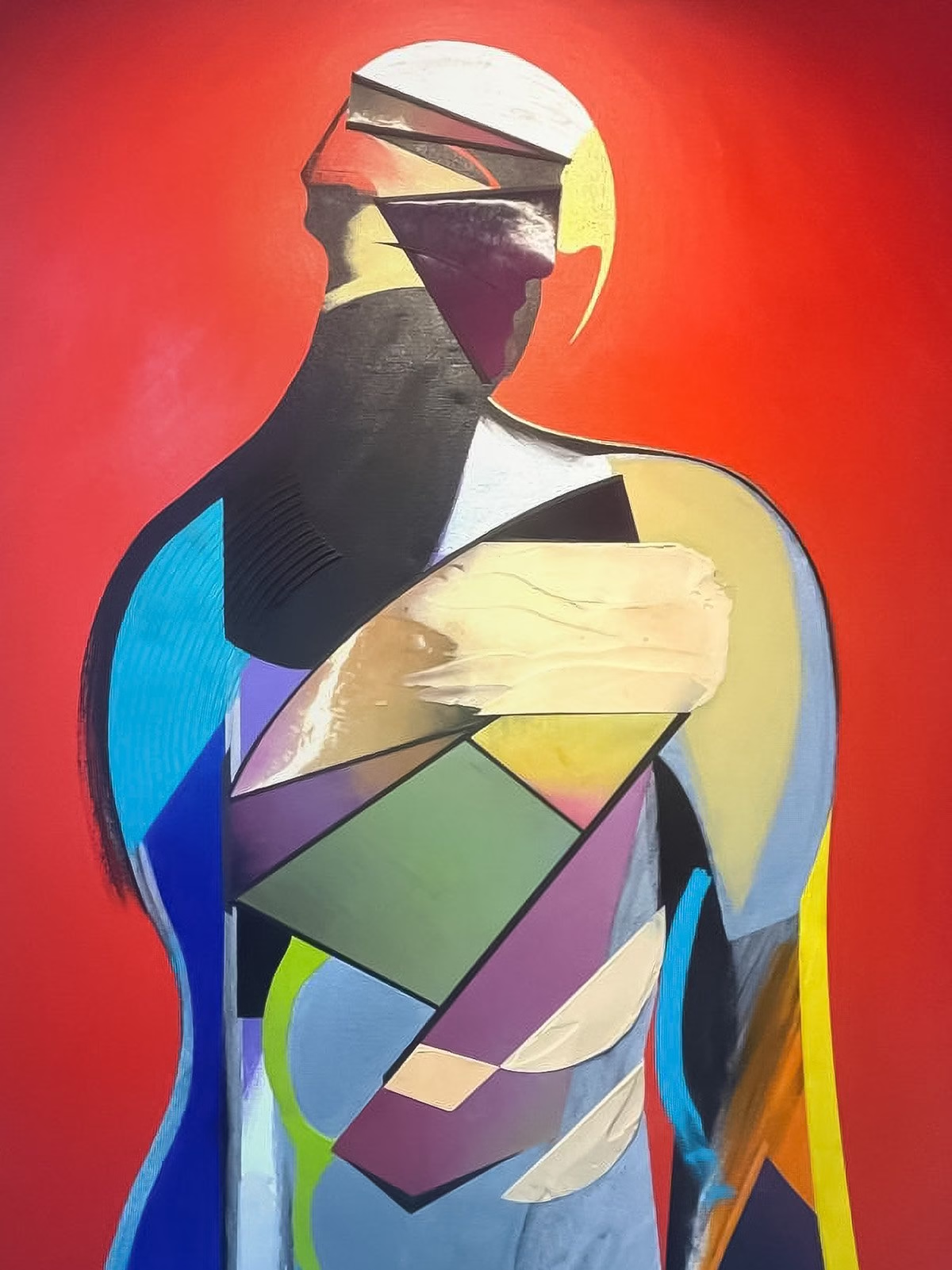
        Adam Neate, ‘Retrato’ available from      Flurorescent Smogg
    Adam Neate, ‘Retrato’ available from Flurorescent Smogg

    The reconstructed self doesn’t take any crap.

    “Assertion is a common after-effect of medicine work,” says Dr Lafrance coyly, in her eye-opening lecture to Vital students on hw psychedelic therapy goes down in the real.

    Like the article says over in the Approach section of Zine #17 here, Dr Lafrance says therapists see two secondary emotions most commonly in the field.

    “Empowerment skills, when they’ve perhaps not been done before, are usually too mousey… or too much”

    Those two feelings she hears about the most are sadness, as one might expect from the depressed, and rage.

    “Anger is a challenge for many people,” says Dr Lafrance, “but not all anger is destructive. There is healthy anger.”

    This more righteous kind of fury can often be confused, shall we say, with assertiveness.

    “Culturally we really struggle,” comments Dr Lafrance, “I’ve been in therapy for 20 years working on my capacity for anger, standing up for myself, and asking what I need.”

    The rage-fuelled are shying away from vulnerability according to emotion focussed therapy, and it “shows up as these problematic reactions that fuel expression of symptoms,” says the clinical psychologist, somewhat eupehmistically.

    “Empowerment skills, when they’ve perhaps not been done before, are usually too ‘mousey’, or too much,” explains the blonde boffin, “plus the most predictable reaction to unexpected criticism is defensiveness.”

    Dr Lafrance provides scripted frameworks for the budding bearish buccaneer.

    “I always assume user error. You know, because it helps me to cultivate more sophisticated skill”

    She’s kind enough to share one with Vital students during the post-lecture Q&A, when I ask about help with my own fermenting… assertiveness.

    “I always assume user error. You know, because it helps me to cultivate more sophisticated skill,” she advises. 

    “If I’m expressing assertion, especially if it’s in a relationship where it’s kind of a novel experience, and it doesn’t go well… then I ask myself: ‘What am I doing or not doing to contribute to this problem?’” 

    That’s how she hit on the idea of detailled advice for pateints fumbling their way into self-confidence.

    “I was encouraging people to express assertion, and it’s not going well. So then I, as a therapist, asked myself ‘How did I contribute to that?’ Like, ‘Oh, shit, we didn’t warn them.’ So I wrote, I wrote the script now that I give to all the clients.”

    And it goes a little something like this:

    ‘I realised that I don’t always say or tell the truth about how I feel. Or about what I need. It’s hurting me.

    And I realise that makes it so that I’m not always honest in relationships. Because I’m scared that I’ll lose people important to me. Including you.

    “Not all anger is destructive. There is healthy anger”

    I really want to make a change in this way. I want to be more honest. And I want to have more faith.

    Faith that heart-centered motivation is there at the forefront. And faith that this relationship can sustain the changes that are required for it to evolve. 

    Would it be okay, if I started, in this relationship, being more honest about the things that hurt?

    Or the things that anger me? Knowing that it’s really because I want to find a new normal that will serve us both?’

    You might as well give it a go, you’ve tried evrything else. Could avoid an ‘Iatrogenic’ – therapist-induced – divorce.

  • Trip for me babe… trip for you?

    Trip for me babe… trip for you?

        Integration
    Integration

    After a fortnight in the jungle, your relationships might never be the same

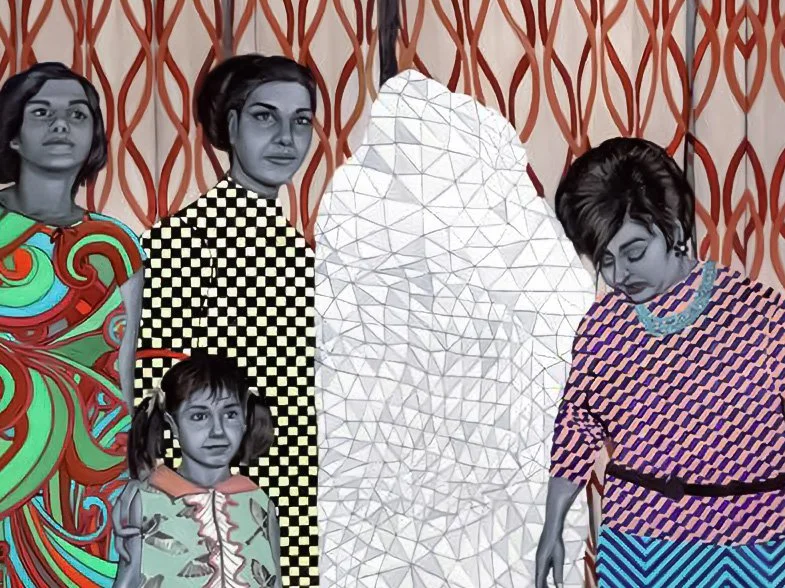
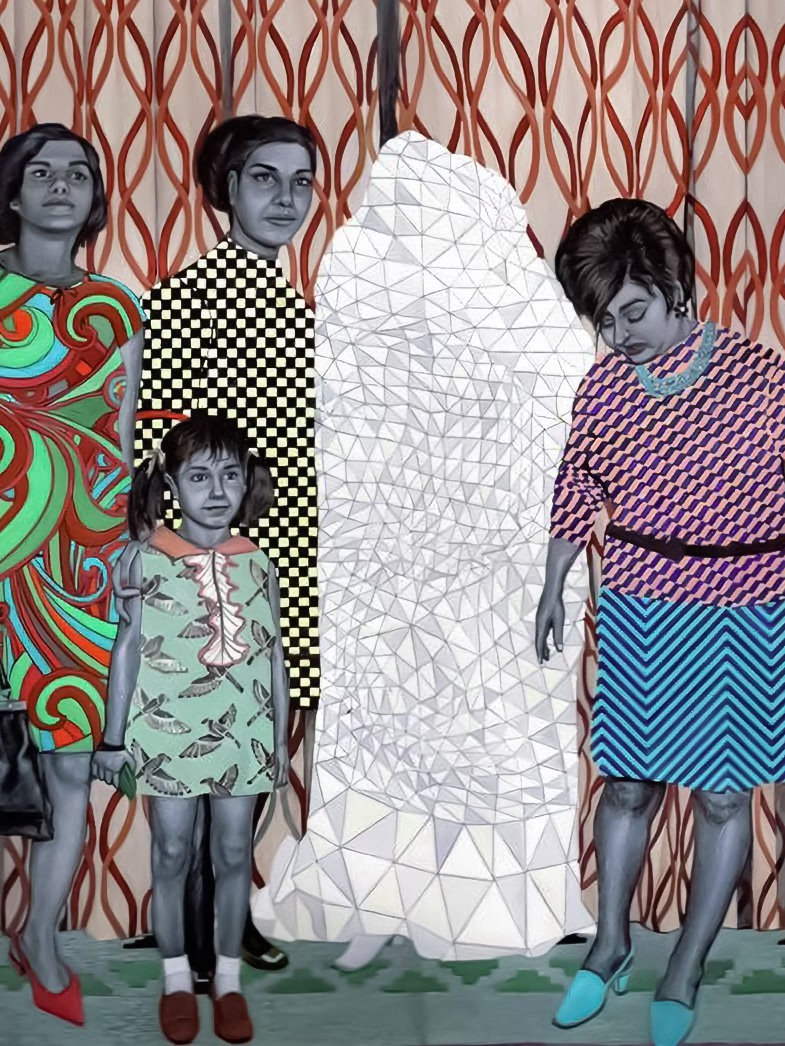
        Soheila Sokhanvari, The Gift, from the exhibition      Rebel Rebel at The Barbican     , London till 22 Feb 2023
    Soheila Sokhanvari, The Gift, from the exhibition Rebel Rebel at The Barbican , London till 22 Feb 2023

    “I’ve a feeling we’re inadvertently harming a lot of family members. If your partner goes for a two week ayahuasca retreat in the jungle, your life is going to change.”

    Thus warned Dr Adele Lafrance in her lecture to Vital students about how feedback from the frontlines is informing psychedelic therapy.

    And the emotion-focussed therapy expert told the Vital cohort that things can get even more cluster-fucked than that, once psychedelic rhetoric sets in. 

    “The concept of blame in psychedelic work is very delicate and potentially dangerous,” she says in her quietly subversive style, “there’s that fundamental belief that ‘we are all one’ and ‘inner conflict is related to outer conflict’.” 

    Transcendent resolutions usually only happen in retreat brochures. “Healing can be disruptive,” points out the self-declared ‘steward for reality’ – “We don’t want to throw anyone under the bus.”

    If handled correctly, “Holding the healing for the patient’s chosen, natural environment can encourage positive effects, lessen negatives, and evolve relationships,” says Dr Lafrance, improving key connections for the benefit of all concerned. 

    “Neuroscience supports the healing power of supportive caregiver-loved one reactions,” she continues, encouraging “Working at letting go of blame narratives and fantasy as a tool, in particular those involving our primary caregivers… as for some reason, at this stage of evolution, humans are strongly affected by the context of attachment relationships.”

    Psychedelic culture, its rhetoric at least, is infamous for butting up against reality: from free love to not doing any washing up in the hippy commune and the ‘all conflict is bad, mmm-kay?’ notion referred to by Dr Lafrance above.

    “It’s a skill to hold space for absent family members”

    And patient-voyagers often come crashing back down to Earth when they head back to the all-too-real environment of the office, family dinner table, or marriage bed.

    “As a field we need to think how we’re managing systemic stress,” says the working doctor, “If we foster asymmetry of growth by only treating one person, it can have worse outcomes for the client – breakdown of a marriage, for example. There is a high chance of getting divorced, when if we treated both the relationship could have thrived.”

    MDMA-assisted couples’ therapy is still a few years off. What can psychedelic therapists do to keep ‘systems’ like couples and families in union till then?

    “It’s a skill to hold space for absent family members. And it can be an especially complex skill to deeply validate the client’s experience while still honouring the family member,” advises Dr Lafrance.

    “We don’t want to throw anyone under the bus”

    She’s a specialist in Emotion Focussed Therapy (EFT) which has its own branch for next of kin, Emotion Focussed Family Therapy (EFFT).

    During Zoom lectures, “I normally have my hibiscus behind me,” says the congenial clinical psychologist, with no further explanation of her favourite flora’s current whereabouts, “I normally point at it while I say this; a client’s lineage makes up the whole plant. So, an example of what I might say [about their family] is, ‘Yes, they were not able – not didn’t care, or didn’t try. Let’s cultivate these experiences, so you can be the first flower in your family lineage to bloom.”

    Cod spirituality around ‘respecting the ancestors’ is best kept in mind, rather than hectored at the client. “We don’t have to tell the patient, but it’s important for us to remember the cultural, religious and social influences that changed the directory of their lives.”

    Here in the UK, family members have a legal right to a ‘needs assessment’ that can provide additional support, and a study on Multiple disassociation disorder (MDD) Dr Lafrance is consulting for here in Europe involves the family. “This could be a formal process during screening [in the USA] as things get legal, especially if they are under-resourced or unaware,” she says.

    Those of us who are wary of social services padding about our home, or feel their help may be superfluous, might also find ourselves cast in a role of responsibility, where certain emotions are unwelcome.

    And personally, I’ve seen more women presenting at services usually associated with men, like anger management (see the Kardashian sisters for a celeb example). It’s connected to a sense of overwhelment, usually from satisfying others’ needs before one’s own.

    “We don’t want people to taint our experience when it’s so fresh, raw and vulnerable. So we tell the family that they can’t expect to hear all about it”

    Says Dr Lafrance, “There are gender differences, unfortunately, that are still true you know, in terms of how we have been culturally conditioned to connect with emotions. Men still struggle more with sadness, fear and shame. Women, because of cultural conditioning, and socio-political movements meant to suppress female assertion, still struggle with healthy anger. So that’s why I use this dichotomy: ‘Which one is true for you?’ Because it’s not always gender specific, especially as we continue to evolve as a culture around questions related to gender roles.” 

    The respected clinical psychologist also recommends discretion around any potent visions and insights voyagers may’ve enjoyed. “At the end of the session we’ll ask the client what they feel comfortable sharing that doesn’t compromise them, their needs, or their integrity, but is still informed by what a couple might need. We don’t want other people to taint an experience when it’s so fresh, raw and vulnerable. So we tell the family that they can’t expect to hear all about it.” Bear in mind that sharing you spoke to an omnipotent mushroom counts for that.

    What if, like myself, you sometimes get carried away with the notion that everyone in your family would benefit from a little medicine work? 

    “When I was in the jungle what came up over and over again was – you have to be in touch with reality”

    In the post-lecture question and answer session, I asked Dr Lafrance how not to share too much with friends and family: “Yeah, in fact, that would be another point of direct intervention, actually. So thank you for bringing that up,” she replied, “If someone in the context of the ceremony, you know, or session says, like, ‘Oh my gosh, I wish my parents would do this, I wish my brother would do that, I wish my sister…’ then I will ask them to look more deeply into that.”

    Doing so might enable the patient to “Release themselves, and release that person from, you know, having to be at the same stage of healing,” says Dr Lafrance, “Release self first, release other second. And if that comes up in integration sessions, I would do it the same way – like, ‘Yeah, check in with the part of you that is longing for that. Let’s see what it needs. Let’s see what it says’.”

    Dr Lafrance can certainly tell you what the Grandmother Spirit had to say about her own familial ins-and-outs, during a lengthy ayauasca retreat.

    “When I was in the jungle, that was one of the things that came up over and over again – like, you have to be in touch with reality.” 

    Which is probably a better tip than ‘You must respect the ancestors.’ But like anything genuinely helpful, it’s not easy to take on board. 

    “They are limited in their capacities,” she explains, “And it’s not because they don’t love you. It’s not because they desperately want you to be different, that you’re not going to be able to get what you’re looking for. And so where else you’re gonna get it? Inside. And I cried many tears over that, you know, sprawled out on the earth outside of the maloca. Like, not wanting that to be true.”

  • Kool-Aid Corner #17

    Kool-Aid Corner #17

    To finish: trippy clippings, merry pranks, and psychedelic student life

    Graph of the Week

    A model of ‘psychedelic instrumentalisation’ by early humans, and of the evolutionary consequences of its intergenerational recurrence…

      Figure 1: ’A model of psychedelics instrumentalisation by early humans, and of the evolutionary consequences of its intergenerational recurrence. The left side represents the process of instrumentalisation, which can occur repeatedly across the life-span of a generation of hominins. The right side represents the process of niche-construction supporting gene-culture coevolution across generations as populations construct and bequeath transformed ecological and social environments that exercise selective influences on following generations (Odling-Smee et al., 2003). The left side of the diagram portrays potential selective advantages conferred by psychedelic use under the socio-ecological conditions in which our ancestors evolved. The right side illustrates the process of selective feedback through which psychedelic instrumentalisation could have enhanced the creation and evolution of the human socio-cognitive niche. The four coloured boxes on the left represent the major aspects of the emerging human adaptive complex that created the socio-cognitive niche; these involve skills and processes potentially amplified by psychedelic instrumentalisation, with the two-directional arrows between the boxes representing the interconnectedness of these competence realms that coevolved in creating our unique adaptation mode. The emergence and persistence of this adaptive complex across human evolution permitted the progressive construction of socially modified environments (represented by the green box at the right side of the diagram) that in turn selected for enhancements in the same underlying human propensities and capabilities (represented by arrows with a plus [+] sign) that sustained the socio-cognitive niche.’  From:  Psychedelics, Sociality, and Human Evolution  by José Manuel Rodríguez Arce and Michael James Winkelman, published in Frontiers of Psychology, September 2021.
    Figure 1: ’A model of psychedelics instrumentalisation by early humans, and of the evolutionary consequences of its intergenerational recurrence. The left side represents the process of instrumentalisation, which can occur repeatedly across the life-span of a generation of hominins. The right side represents the process of niche-construction supporting gene-culture coevolution across generations as populations construct and bequeath transformed ecological and social environments that exercise selective influences on following generations (Odling-Smee et al., 2003). The left side of the diagram portrays potential selective advantages conferred by psychedelic use under the socio-ecological conditions in which our ancestors evolved. The right side illustrates the process of selective feedback through which psychedelic instrumentalisation could have enhanced the creation and evolution of the human socio-cognitive niche. The four coloured boxes on the left represent the major aspects of the emerging human adaptive complex that created the socio-cognitive niche; these involve skills and processes potentially amplified by psychedelic instrumentalisation, with the two-directional arrows between the boxes representing the interconnectedness of these competence realms that coevolved in creating our unique adaptation mode. The emergence and persistence of this adaptive complex across human evolution permitted the progressive construction of socially modified environments (represented by the green box at the right side of the diagram) that in turn selected for enhancements in the same underlying human propensities and capabilities (represented by arrows with a plus [+] sign) that sustained the socio-cognitive niche.’ From: Psychedelics, Sociality, and Human Evolution by José Manuel Rodríguez Arce and Michael James Winkelman, published in Frontiers of Psychology, September 2021.

    My bookshelf weighs a ton

    Notable new purchases for the occult library. It’s supposed to be strictly second hand snap-ups only. But I’m flagging on that to be honest. It’s now more in the spirit of a second hand bookstore. This week: The Entropy of Bones by Ayize Jama-Everett

         You’ll probably have to get it from/in America or off of Amazon
    You’ll probably have to get it from/in America or off of Amazon

    Ayize Jama-Everett handled the psychedelic racial awareness training on Vital. There’s a bit of a syncronicity here because I came across his name before in relation to my martial arts side hustle Battles of London (‘The brand making fight clothing cool’ says Men’s Health). I was going to hassle him for a short story for our print mag. But, y’know, lockdown.

    Reading the signs, I bought this one because it had a snake on it.

    The cover’s actually by John Jennings, a top-flight comic artist (and more) who Jama-Everett’s created a graphic novel with. Actually, one of the things I admire about The Entropy of Bones is that Jama-Everett must get told all the time ‘Why isn’t it a graphic novel?’ and that he’s nonethless written two others in the same vein (series, in fact).

    Anyway, what’s really good about The Entropy of Bones is it’s about getting into your body. Which is admittedly also in danger of bnecoming psycedelic rhetoric, one of the unofficial themes of this Unofficial Vital Student Zine.

    Plus there’s lots of other five star biz too, like: super-powered martial arts, smokeable psychedelic fungi, international-level decadence, weed farming and jungle drum ‘n’ bass.

  • Substances and mechanisms with Dr Charles Nichols

    Substances and mechanisms with Dr Charles Nichols

    My unofficial Vital Study Zine #16 with observations from Vital Psychedelic Training and recent happenings in the space

          Pamela Simard     , ‘BDL’
    Pamela Simard , ‘BDL’

    Dr Charles Nichols – son of canonical chemist Dr David Nichols – puts forward a single very good reason for extracting the profound components from psychedelics.

    “These drugs are taking so long to develop because the FDA wants much more rigorous testing,” he informs us from the front line of medical authorisation.

    One particular medicine on his to-do list Charles found by isolating the properties of mescaline, synthesised from the peyote cactus.

    Turns out psychedelics interact with cells in the soft muscle tissue around the heart, as well as the brain. He’s already registered a patent.

    While LSD for example “isn’t a very strong anti-inflammatory” Charles says, mescaline has an “extremely potent” effect on inflammatory-based issues like, for example, breathing condition asthma.

    The discovery could have major implications for psychedelic healing of previously unconsidered issues. Not just physical struggles like asthma but also schizophrenia, Parkinson’s and Alzheimer’s which are all connected with inflammation.

    “So much has to do with inflammation and the over-active immune system right now,” says Charles, pharmacology professor at LSU Health Sciences in New Orleans with a background at Purdue and Vanderbilt universities.

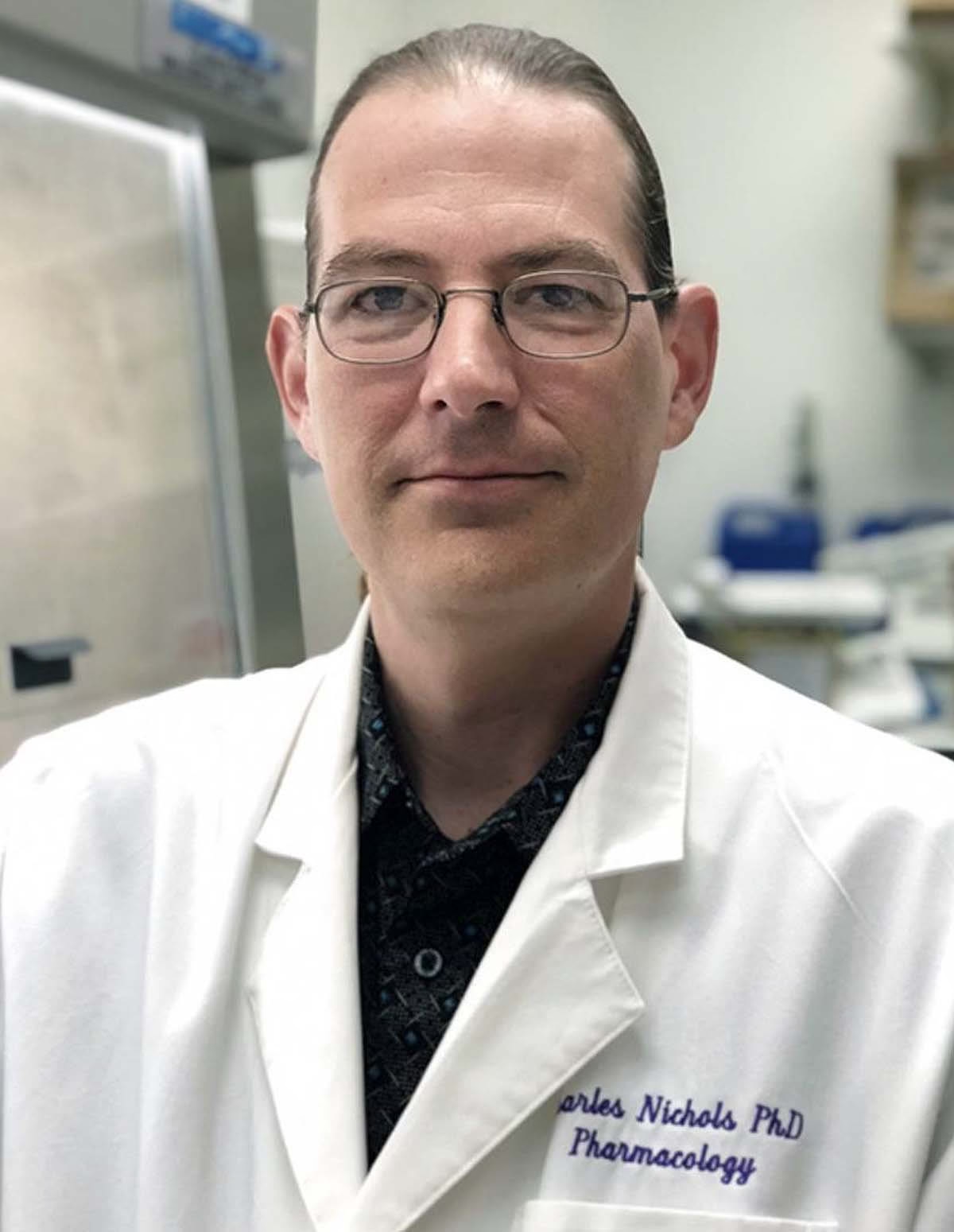
        Charles on the      job     . Embroidered lab coats FTW
    Charles on the job . Embroidered lab coats FTW

    ‘Inflammation’ is shorthand here for ‘chronic inflammation’. Oxidants produced in the aftermath of a stress hormone spike for example, linger around and screw stuff up over time.

    “I never intended to follow my father into psychedelics actually”

    It’s a cause of cancer, psoriasis, arthritis, asthma, allergies, Chron’s Disease, hepatitis, neurodegenerative diseases like Parkinson’s, and more. In younger folks chronic inflammation is mostly caused by stress, bad diets and poor sleep.

    The chemical aspect in question has nothing to do with the ‘psychedelic’ properties of mescaline. It has the same anti-asthmatic effect on its own sans tripping when tested on Charles’ elite lab rats bred for psychometric testing.

    The intrepid rodents tested it out against 25 other designer psychedelics from the drug cupboard Charles inherited from his father David: the pharmacologist who synthesised DMT for Rick Strassman, MDMA for MAPS and psilocybin for PsiloDep 2.

    “I never intended to follow my father into psychedelics actually,” says Charles coyly when I ask in the Q&A if he’d ever noticed the hand of fate guiding his work – like it did when Albert Hoffman felt compelled to re-examine the LSD that’d sat on his shelf un-investigated for seven years.

    Charles tried to evade his cosmic destiny in vain. Two separate freaky coincidences nudged him towards a career in consciousness expansion.

    The eventual pharmacologist initially studied genetics. Even now Charles’ ‘animal models’, creatures bred for testing purposes, are much envied in scientific circles.

    Exhausted by the minutiae of fruit fly genetics after finishing a Phd, the younger Charles was restless for change. Twirling absent-mindedly on his lab stool wondering how to enter the world of employment, Charles spied a promo ad for a new book from Vanderbilt University scientist Elaine Sanders-Bush, who he’d heard his father mention.

    He called up and asked about assistant roles.

    “It turned out the job involved studying the effects of LSD on mouse and rat brains,” says Charles, “it was one of only a handful of labs doing so at the time. They’d run out of budget for now and couldn’t hire anyone. But a few months later Elaine called and asked if I was interested.”

    Charles met Sanders and showed her his resumé featuring his education at Perdue University. “Elaine said she knew a Dr David Nichols there, at which point I had to tell her,” confesses Charles.

    “Eventually we might isolate the qualities of peak experience, ego dissolution and breaking stuck thinking”

    The next turning point came as Charles was working at New Orleans University in the chaotic aftermath of Hurricane Katrina. Struggling to find researchers he took a chance on a visiting Chinese scientist who needed facilities. By 2013 Charles and collaborator Bangning Yu had isolated the effects of mescaline-derived DOI on inhibiting tumour necrosis factor (TNF)-a mediated inflammation, which is associated with asthma, Parkinson’s Disease and many more conditions not previously part of psychedelic research.

    ‘Our data suggests,’ reads the modest blurb, ‘that sub-behavioural levels of certain psychedelics represents a new, steroid-sparing, small molecule strategy for the treatment of peripheral inflammatory related diseases.’

    Targeting diseases on the fringe of psychedelic potential is not where Charles’ quietly vast ambition ends, though.

    The basic neuro-scientific explanation of how psychedelics do their thing is the chemicals interact with receptors in the body’s cells. In particular ones given the code ‘5-HT2a’ usually given over to the neurotransmitter serotonin.

    LSD contains serotonin in its chemical make-up. It latches on to receptors; hence the lengthy trip. Serotonin certainly isn’t simply ‘the happiness chemical’. It’s related to memory, learning, imagination, sexual arousal, appetite, anxiety and ‘diseases with complex etiologies.’

    “Pressing different 5-HT2a receptors, and others, creates the various effects,” says Charles. Identifying medical properties could be just the beginning, he insists: “Eventually we might isolate the qualities of peak experience, ego dissolution and breaking stuck thinking.”

    That’s not all. A new testing system Charles has designed examines the long terms effects of a single dose, identifying ‘persistent normalisation of stress-induced hippocampal dysfunction relevant to depression and other psychiatric conditions’

    Find out more about Charles’ astonishing findings and their implications in this issue’s contents just below. You can also see Charles present his findings here, talk about inflammation and more with Mind and Matter here, and his thoughts on psychedelics and genetics plus more over on the New Psychonaut YouTube lecture channel. Follow Charles on Twitter at @lab_nichols.

    If you want to go deep on neuroscience may I recommend Tokyo-based, Cambridge-educated neuroscientist Dr Andrew Gallimore’s extensive guide.

    Here’s what’s in this week’s issue of your multi-syllabic Vital Student Zine, themed along Vital Psychedelic Training’s core pillars of study:

    These five items I pulled from the week’s research are themed along Vital’s natural element-themed structure. Air provides an overview of psychedelic use, Fire concerns therapeutic applications, Water covers ‘space holding’ – the art of keeping it together, Earth is where you’ll find medical matters, and Ether discusses integration, the process of bringing psychedelic power into regular life. Click straight through to your pet subject.

  • Appliance of Science

    Appliance of Science

      Approach
    Approach

    Purists sneer at scientific tinkering. But lab studies showed Dr Nichols how psychedelics heal the body. Could he uncover the secret of profundity too?

         By      Ryoichi Kurokawa
    By Ryoichi Kurokawa

    Neuroscience is different to other aspects of psychedelic study, ‘since it is so spectacularly and usefully right over so many things.’

    Raymond Tallis wrote those semi-satirical words in Aping Mankind: Neuromania, Darwinitis and the Misrepresentation of Humanity. Neuroscience ‘is often given authority where it has none’ warns Tallis.

    Grudgingly I admit all those long words and graphs might come across well in a formal context. During a presentation to drug legislators, for example. Certainly compared to showing a clip of Tales from the Trip on the the meeting room’s wall-mounted LCD screen. 

    So it’s sweetly satisfying for heads to beat bureaucrats at their own game with the slew of pro-psychedelic neuroscience stats flooding out of respected institutions.

    Granted, the arcane apparatus of the psychedelic experience itself remains beyond even the grasp of they who have mastered the most multisyllabic words from this incomprehensible, in-style, inculcation. 

    “That’s still a wide open mystery,” confesses Dr Charles Nichols, eminent psychedelic pharmacologist and Vital neuroscience lecturer.

    “Specific pathways may be involved in the psychedelic process”

    Charles is the son of Dr David Nichols, chemist to the stars. David made the DMT for Rick Strassman, MDMA for MAPS and psilocybin for Johns Hopkins.

    “Back in the 2000s my father’s lab looked at the cross talk downstream from when G-alpha-i protein interacts with a specific beta and gamma that activates a hormone called Src, which then activates a series of enzymes. That’s the very top effector.”

    Right. No wonder nobody’s got to the bottom of it as yet. 

    “Specific pathways may be involved,” Charles whispers conspiratorially to the cheap seats.

    No talk of neuroscience in these pages is complete without a mention of Greatest Living Englishman Dr Robin Carhart-Harris.

    Dr Carhart-Harris’ sympathetic yet rigorous research at scientific bastion Imperial College London brought the psychedelic experience its medical legitimacy. His REBUS, ‘relaxed beliefs under psychedelics’ model is widely considered the neatest summation of psychedelic neuroscience. (without wishing to damn it with faint praise). 

    “My lab studies what psychedelics do that serotonin doesn’t”

    For anyone too embarrassed to ask the scientific way to say ‘tripping’ is ‘Relax the precision of high-level priors or beliefs, thereby liberating bottom-up information flow, particularly via intrinsic sources such as the limbic system.’ Obviously.

    Dr Charles Nichols is a pharmacologist developing new drugs. Unlike his celebrated psychedelic chemist dad Dr David, Charles has the benefit of Carhart-Harris’ research, or its slipstream at least.

    Charles uses his prodigious skill with the pestle, mortar and petri dish to identify, isolate and augment certain properties within his arsenal of exotic designer psychedelics.

    Specifically, “The study is my lab now is around what psychedelics do that serotonin itself doesn’t,” says Charles. 

    Which is a lot.

    He’s already found that mescaline-derived DOI has a tremendously positive effect on inflammatory conditions including asthma. And, he’s worked out that it’s not even one of the bits that makes you trip. Which has implications aplenty for widespread use. And the sensitive conversation around non-psychedelic psychedelics.

    (Ethnobotanist Richard Evans Schultes wrote in 1938, “Some of the ills listed as responding to peyote were tuberculosis, pneumonia, scarlet fever, intestinal ills, diabetes, rheumatic pains, colds, grippe, fevers and venereal diseases.” Cheers Mark Gunther of Lucid News).

    Psychedelics possess less ‘inhibitory’ effects on brain receptors that might suppress ‘excitatory’ ones, compared to serotonin. They hit the accelerator while cutting the brakes: boosting neurotransmission while hindering the body’s autonomous attempts to bring body chemistry back to ‘normal’.

    “The profound and mystical effect itself is still a mystery”

    This initiates a ‘synaptic cascade’ of excitatory messages. Once that gets to the Raphe nuclei in the brain stem connected to the whole brain, it’s blast off.

    The resulting “downstream cross talk” takes an unusual route through the nervous system. Precisely what is a little vague. Zen meditation buff Dr Bryan Roth is on it with a system he calls ‘TRUPATH, an open-source biosensor platform for interrogating the GPCR transducerome’. He’s also the guy making the non-psychedelic psychedelics for DARPA.

    “All psychedelics have a surprisingly different set of reactions with the 5-hydroxytryptamine receptors associated with serotonin,” says Charles, “but they all work on 5-hydroxytryptamine receptor 2a.” 

    Neuroscientists gave it with the catchy nickname ‘5-HT2a’. Relax, they’ve got loads more.

    Mescaline for example only activates two other receptors besides 5-HT2a. LSD’s “complex pharmacology” on the other hand means it interacts with 17 different receptors in total.

    ‘The phrase 5-HT2a agonist has supplanted psychedelic, which still carries faint whiffs of hippie-era hedonism,’ tech bible Wired tipped us off in its recent feature The High-Stakes Race to Engineer New Psychedelic Drugs.

  • Neuroplastic Smiles

    Neuroplastic Smiles

      Therapy
    Therapy

    “Biology drives the effects of psychedelics but therapy shapes them,” says the latest scion in the Nichols psycho-pharmacological dynasty

         Ron English,      ‘Rabbit Grin’
    Ron English, ‘Rabbit Grin’

    The freshly ‘neuroplastic’ brain and new grey matter created during ‘neurogenesis’ both require careful curation from therapy afterwards, declares Dr Charles Nichols.

    It’s notable that a hardcore neuroscientist stresses the importance of combining his drugs with talk therapy.

    “If you don’t have therapy in the weeks after you may go back to that baseline state,” says the star chemist, “the process strengthens newly made connections and dampens old ones.”

    It’s a clear decision he’s come to after a career formally studying the effects of mind-altering chemicals, under exhaustive laboratory conditions. And taking fatherly advice from dad David, the most prolific psychedelic chemist of his generation. 

    ‘Neuroplastic’ effects last for many days after the psychedelic experience itself. Little spiky nodules sticking out from the surface of brain cells called ‘dendrites’ grow in cells all over the brain. This provides fertile ground for fresher, healthier thinking patterns to germinate and grow. 

    ‘Neurogenesis’ is different. It’s the generation of new brain cells. Those ones your school nurse said you’d never get back. Admittedly establishment science is yet to entirely admit she was be wrong. Humans are only capable of neurogenesis in the hippocampus, boffins reckon. We get it from aerobic exercise, sex, worthwhile achievement and all the other good stuff.

    No prizes whatsoever for guessing what else is said to cause neurogenesis. 

    Say neurogenesis is real and not some figment of the ever-lively psychedelic imagination. Given it definitely happens in chimps and rats it probably is. These new brain cells require injecting with healthy thought patterns by integration tactics and therapy too.

    What’s more, Dr Charles Nichols, born of David, categorically states that psilocybin is a more effective anti-depressant treatment than ketamine.

    “If you don’t have therapy in the weeks after you may go back to that baseline state”

    Although ketamine boasts impressive effects including its distinct ‘glutamate surge’ and anti-microbial properties, Charles’ rats felt psilocybin’s anti-depressant powers for much longer.

    Real psychedelics use their own neuropathic pathway to create neuroplasticity, believes Charles, not the MTOR pathway usually associated with glutamate-derived GABA and any ketamine-led ‘surge’ thereof. 

    Charles’ lab rats are still above their baseline satisfaction scores three months into the official testing period and counting. On ketamine they were back to baseline after one week. “Both will snap back but the difference is significant,” comments Charles.

  • Brain architecture and morality

    Brain architecture and morality

      Space
    Space

    Keep those hearts open to differing emotions triggered by corporate psychedelia. And watch our for N-BOMes

       By    Daniel Amersham
    By Daniel Amersham

    DARPA, the Defence Advanced Research Project Agency AKA the US military, have funded UNC’s Dr Bryan Roth to the tune of $26 million for development of a non-psychedelic anti-depressant.

    This jars with many in the space who prefer their medicines to not only come from plants but look like them too. The ketamine crew were jumping skyclad through bonfires at sunrise when they found out a fungus generated it (to kill worms) earlier this year. 

    I don’t entirely blame them. Breaking up nature’s gifts feels hubristic. ‘Pharmahuasca’ contains only the big guns, DMT and MAO-inhibitors, of ayahuasca the jungle brew, which contains as many as 28 different ingredients in total. 

    “Is this bullshit thing started by this random company going to replace psilocybin for example? I don’t think so,” Empath Ventures founder Brom Rector told Psychedelics Today recently, “In business you need to make a big improvement, otherwise no one really cares.”

    The anecdote that rings true with me the most in this argument is ‘In hospital they could give you morphine that doesn’t make you high, but the proper stuff works best.’ THC in marijuana is thought to increase the efficacy of CBD, while the latter makes the former safer.

    Pioneering psychedelic scientists like Vital neuroscience lecturer Dr Charles Nichols’ dad David, Albert Hoffman who discovered LSD, and Alexander ‘Sasha’ Shulgin reviver of MDMA are lionised in the space. 

    Indeed Charles follows in the footsteps of his father Dr David Nichols: who coined the term ‘entactogen’ for MDMA, first synthesised pharmaceutical DMT for The Strass’ 1990s experiments. He also made the MDMA for MAPS and psilocybin for Johns Hopkins. 

    Dr David Nichols is still working. Considered a leading expert in research into the neurotransmitter dopamine, his recent discoveries are already being trialled on Parkinson’s disease and schizophrenia. Charles inherited a library of over 100 new chemicals from his father upon beginning his own research.

    “It takes a lot longer to work with these drugs mostly due to the extra level of testing the FDA requires”

    Compass Pathways, not satisfied with supposedly trying to patent psilocybin, have developed 150 new psychedelics with the assistance of committed scientist Professor Jason Wallach. Wired ran a gushing profile of Wallach, who fits its brand image of the passionate inventor in its summer 2022 feature ‘The Race to Develop new Psychedelic Drugs‘.

    Wired journalist John Semley got less copy from Pathways CEO George Goldsmith and cofounder Lars Wilde: “Ask them what they had for breakfast and they’ll tell you how excited they are to build a new future for mental health,” wrote the frustrated hack.

    Modern-day chemists and their backers get a far harder rap than the old guard, let alone more colourful contemporaries like billionaire Tyringham Initiative sponsor Anton Bilton, and Tokyo-based neuroscientist Andrew Gallimore whose book Reality Switch Technologies: Psychedelics as Tools for the Discovery and Exploration of New Worlds, on how to learn from DMT hyperspace visits lands very soon. 

    Humanity’s developed a love-hate relationship with pharmacology. Sometimes we can’t get enough of its magic beans; later we become deeply suspicious of what it’s up to in its windowless labs. 

    That’s not just a projection of our own shame. Several high-profile incidents over the decades have stoked the embers of misgiving. It was the Thalidomide scandal, where a generation of noticeably deformed children resulted from  a less than rigorous safety testing program, that put the kibosh on early LSD research. 

    The chemical generation’s complex relationship with drug use, and a preference for talk therapy amongst… talk therapists that veers into militancy haven’t helped.

    The pharma sector’s also deeply partial to bureaucracy in its many forms, and that rarely goes down well with those seeking caring and compassion. Anecdotally, there’s also the feeling that the corporadelic guys, with their lanyards and anodyne PR-speak are not really one of us.

    Corpos drew groans at London’s Psych Symposium when a panel on decriminalisation was told we can’t be trusted to grow and eat our own magic mushrooms, because we can’t rate the dosage accurately enough. 

    Besides, where are all these revolutionary new psychedelic-derived medicines? 

    “It takes a lot longer to work with these drugs mostly due to the extra level of testing the FDA requires,” says Dr Nichols during his Vital lecture that opens the course’s Medical Overview of Psychedelics and Clinical Evaluation core module.

    But it’s that level of investigation and learning that often yields major discoveries. In scientific circles LSD is noted for the knowledge about serotonin studying it led to.

    Frankly why should everyone with asthma have to take a trip? Not everybody likes metaphysical poetry, ambient music, plus discovering the inner secrets of the universe… maybe the effing Death Door.

    Besides space explorers are already enjoying the fruits of next-generation psychedelic research. And citizen scientists in the front line of consciousness exploration make for finer subjects than lab rats. 

    Designer drugs combining psychedelic and empathogen (entactogen) effects are not your regular liberty cap and MDMA punch though. ’N-bombs’ or NBOMes to give them their scientific name are described as ‘ultra potent’ by the journal Frontiers in Neuroscience.

    There’s a niche for the ambitious space holder.

  • Transcendental family systems

    Transcendental family systems

        Integration
    Integration

    Ready for ceremonies with mum and dad, the grandparents plus your kids and even the dog?

        Shanthi Chandrase,      ‘Neural Introspection’
    Shanthi Chandrase, ‘Neural Introspection’

    Tribal gatherings could be on the cards for all the clan.

    Phase one tests showed microdoses of LSD did no statistical harm to Alzheimer’s sufferers.

    “LSD’s complex pharmacology works on so many different 5-HT receptors,” 17 to be exact, “that it impairs several of the various functions that lead to Alzheimer’s Disease,” says Vital neuroscience lecturer Dr Charles Nichols.

    Testing LSD on Alzheimer’s patients is an adaptation described as “surreal” in the post-lecture discussion by a psychiatrist studying on Vital. 

    Corresponding tests in the UK are taking place around Liskeard in an idyllic corner of Cornwall, England. Phase one tests for safety have indicated no harm using microdoses of up to 20ug.

    There was however a noticeable increase in ‘psychotic episodes’ amongst the placebo group. Suppress your giggles triggered by thoughts of oldies on an LSD placebo turning up at the health centre convinced they’ve seen a pink elephant. 

    “Psychedelic protocols with children will happen”

    Sounds like the elders can join in the ancestor ceremony; as befits them.

    So can the younger generation.

    “Absolutely there’s a place for effective and safe psychedelic therapy in younger people,” said Dr Ben Sessa in the Q&A after his Vital lecture back in the Therapy module.

    “I have seen too many teenagers lose the battle to mental disorder and kill themselves in my career,” continued Dr Sessa in fine style, “I have no doubt that psychedelic protocols with children will happen.” 

    It’s on already in fact. “MAPS are currently leading the pack in terms of MDMA for PTSD, are going to be doing PTSD research in initially teenagers 14 to 17 then younger age group 11-14, and then possibly six to six to 11,” says Dr Sessa.

    And mum? She can feel really special down at the ceremony.

    “Hormone replacement therapy significantly increases 5-HT2A expression”

    Charles’ is admired for his ‘animal models’. Not a collection of balsa wood dinosaurs that adorn his lab windowsill; rats bred to be especially sensitive to psychometric testing. This sensitive rat pack is mostly female, which has led Charles’ team to discern a key detail for menopausal psychedelic voyagers.

    “Oestrogen, and hormone replacement therapy significantly increase 5-HT2a expression,” he reveals, “So we have to optimise women and men differently.” 

    To test for depression whether treated with psilocybin, ketamine or SSRIs, rats are usually challenged to swim across a small basin of water towards an exit duct. Paddling around searching around for the way out is known as ‘active coping’ and therefore healthy. Zoning out in the middle of the water awaiting your watery end ‘cos what’s the point anyway? is ‘passive coping’, and bad news of course.

    Plus with dogs and cats taking Prozac and other SSRIs it can’t be long before your favourite furry fellow sentient beings are in a higher state of consciousness too.

    Fun for all the family.

  • Kool-Aid Corner #16

    Kool-Aid Corner #16

    To finish: trippy clippings, merry pranks, and psychedelic student life

    Thumbnail image by Janjo Surace

    Graph of the Week

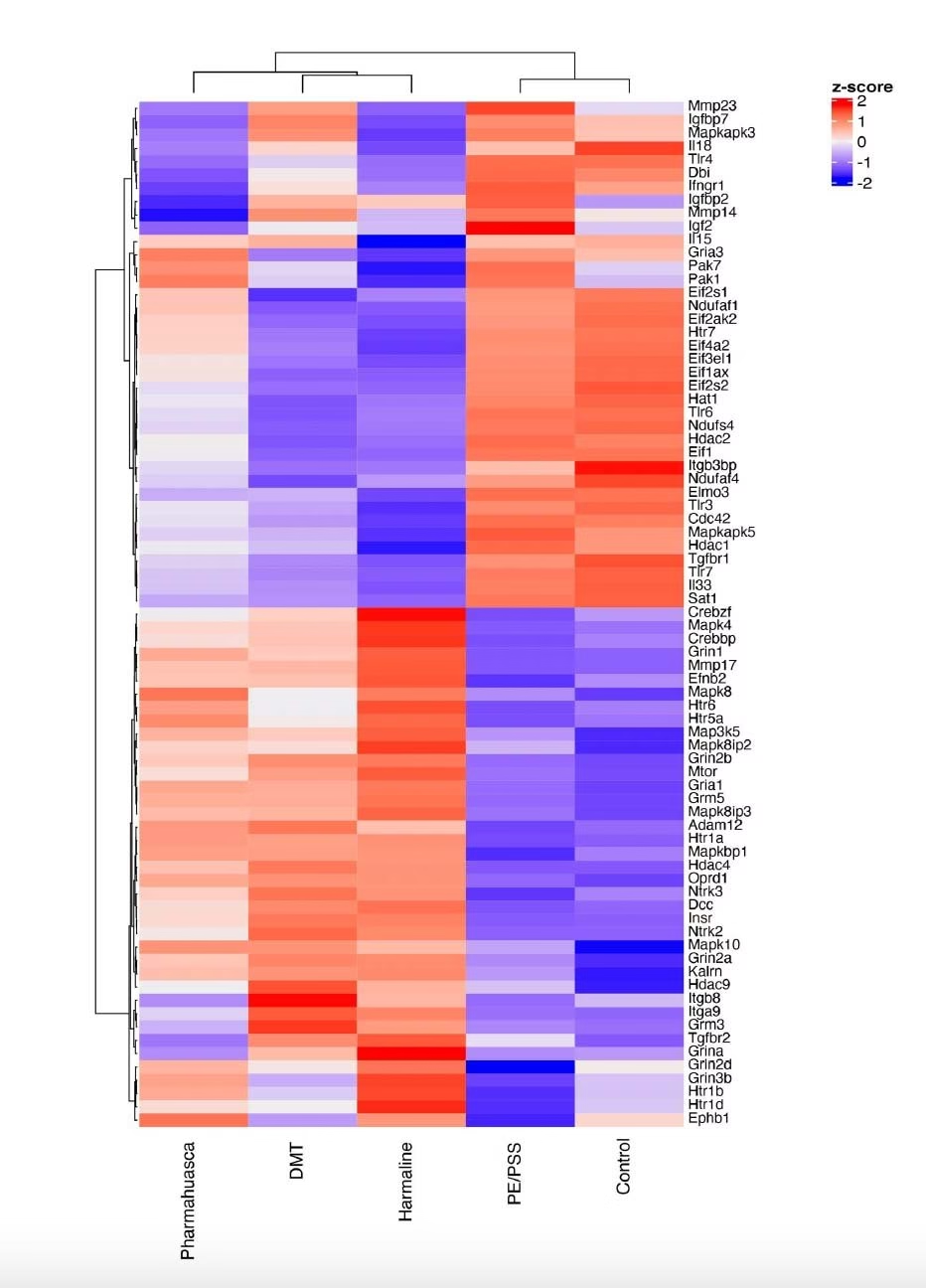
    What ‘pharmahuasca’ including DMT does to genes in rats. Positive effects were shown in the balance between reactive oxygen species cells and the anti-oxidants that keep them from becoming too ‘cytotoxic’ (damaging to other cells) and implicated in the pathogenesis of EG cancer, asthma, pulmonary hypertension, and retinopathy

        Supplemental Figure 1: Heat plot for pairwise comparisons between control, predator exposure/ psychosocial stress (PE/PSS), and PE/PSS + treatment groups. The heatmap illustrates hierarchical clustering of the scaled counts (z-scores) for a set of biologically relevant differentially expressed genes (FDR<0.1).      From:      Pharmahuasca and DMT Rescue ROS Production and Differentially Expressed Genes Observed after Predator and Psychosocial Stress: Relevance to Human PTSD      by D Parker Kelley, Katy Venable, Aspasia Destouni, Gerald Billac, Philip Ebenezer, Krisztian Stadler, Charles Nichols, Steven Barker, Joseph Francis. Published in ACS Chemical Neuroscience Jan 2022
    Supplemental Figure 1: Heat plot for pairwise comparisons between control, predator exposure/ psychosocial stress (PE/PSS), and PE/PSS + treatment groups. The heatmap illustrates hierarchical clustering of the scaled counts (z-scores) for a set of biologically relevant differentially expressed genes (FDR<0.1). From: Pharmahuasca and DMT Rescue ROS Production and Differentially Expressed Genes Observed after Predator and Psychosocial Stress: Relevance to Human PTSD by D Parker Kelley, Katy Venable, Aspasia Destouni, Gerald Billac, Philip Ebenezer, Krisztian Stadler, Charles Nichols, Steven Barker, Joseph Francis. Published in ACS Chemical Neuroscience Jan 2022

    My bookshelf weighs a ton

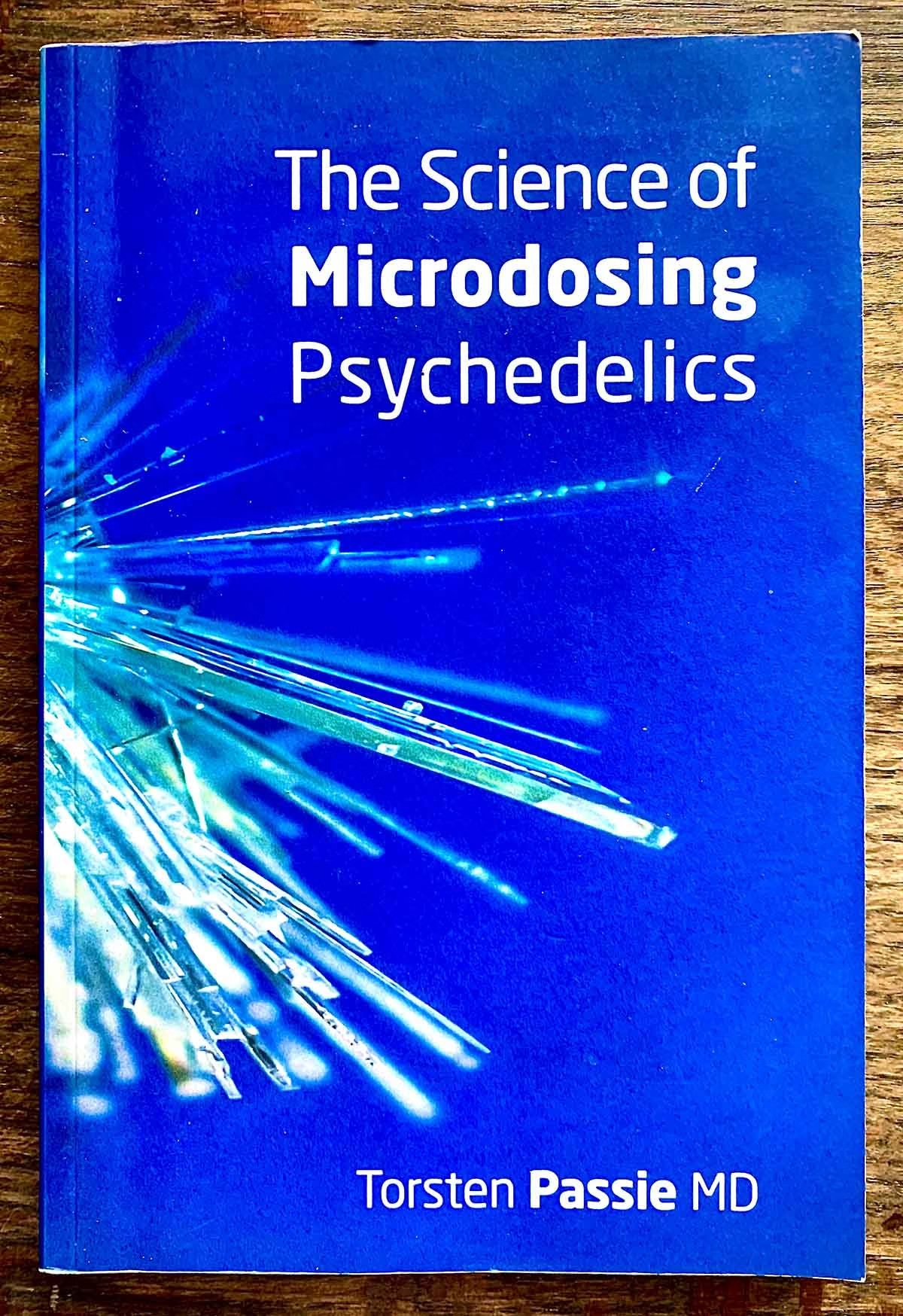
    Notable new purchases for the occult library. Strictly second hand snap-ups only. This week: The Science of Microdosing Psychedelics by Torsten Passie

         Originally £19.99 now fetching      £35-plus
    Originally £19.99 now fetching £35-plus

    Everything you need to know and considerably more from former Harvard lecturer Dr Passie. This is considered the definitive book on microdosing, the unexpected but rather popular trend for small regular doses of psychedelics.

    Originally published by Psychedelic Press for superb UK public conference for the heads, Breaking Convention, this will cost you upwards of £35 on the second-hand market now.

    Dr Passie includes previously untranslated international studies in his comprehensive round-up. He also tackles talking points like the placebo effect. Even if microdosing does not produce any significant effects and it is all placebo, the trend is a new way to introduce it into our society, he told a corresponding interview on the Psychedelics Today podcast.

  • Medical Anthropology and Psychedelics with Dr Luis Eduardo Luna

    Medical Anthropology and Psychedelics with Dr Luis Eduardo Luna

    My unofficial Vital Study Zine #15 with observations from Vital Psychedelic Training and recent happenings in the space

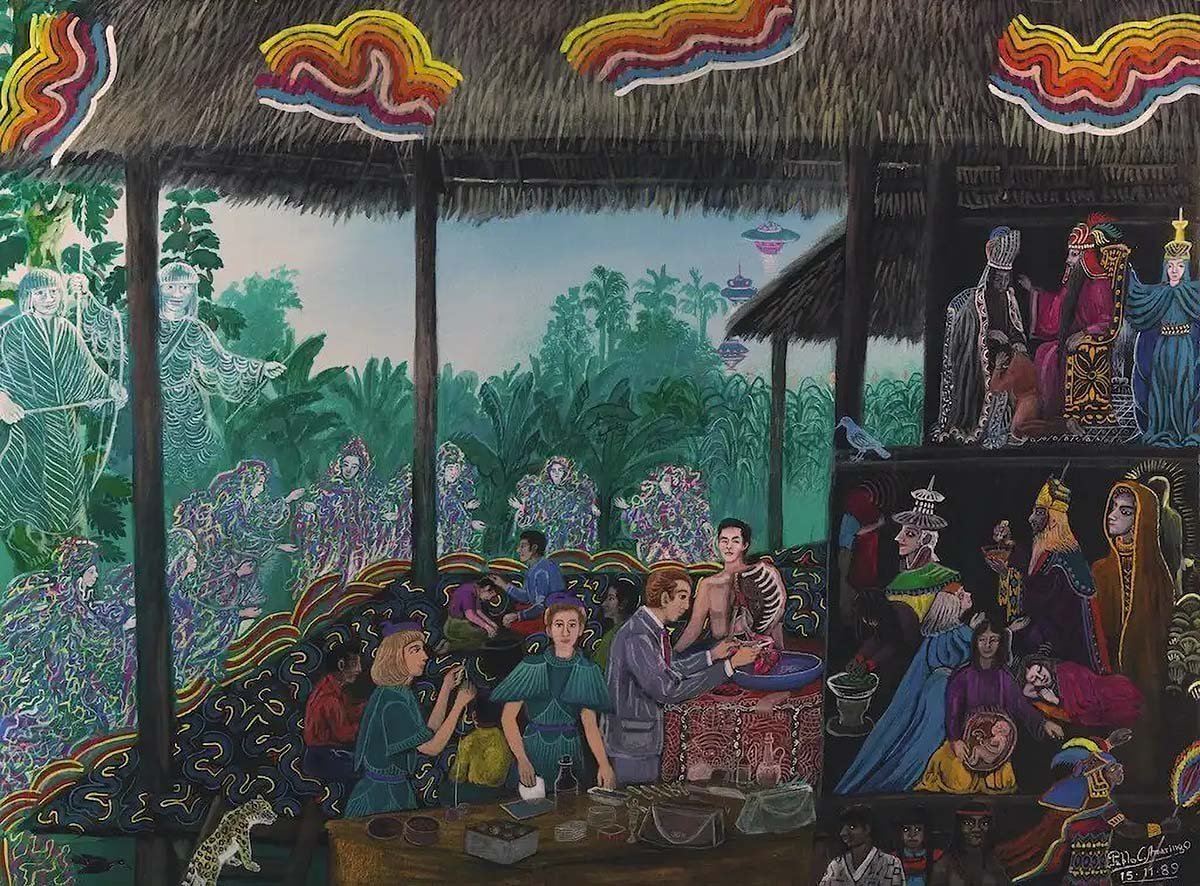
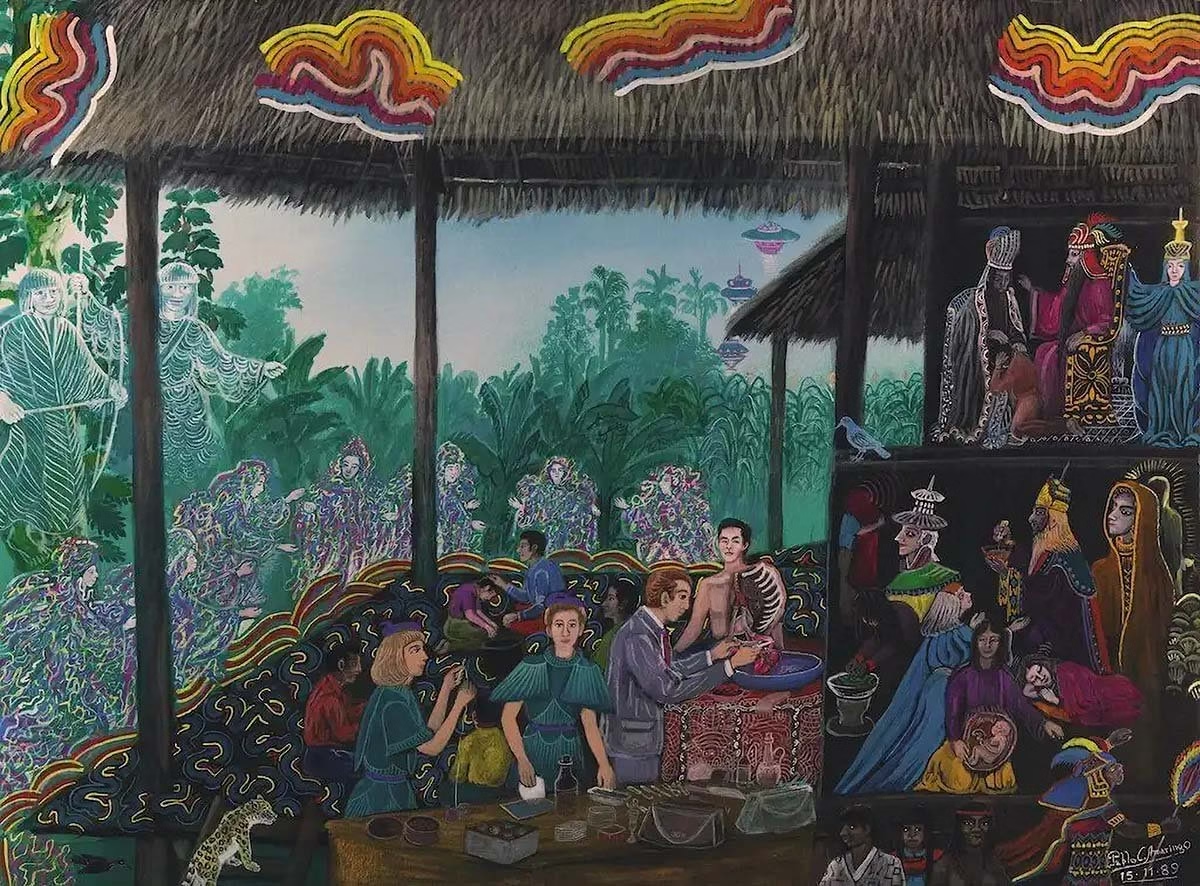
      Pablo Amargino, ‘Spiritual Heart Operation’ via Dr Luna’s    True Amaringos gallery
    Pablo Amargino, ‘Spiritual Heart Operation’ via Dr Luna’s True Amaringos gallery

    Dr Luna is the eminent expert on indigenous psychedelic use worldwide.

    He’s every bit the classy, cosmopolitan professor; armed an incorrigible streak required to pioneer psychedelic research.

    The Guggenheim Fellow and member of the learned Linnean Society of London breaks up a thrilling, theatrical presentation with itemised lists of how Western psychedelic therapy can incorporate Amerindian tradition to considerable benefit. And Amazonian animism, Dr Ludo says, is a practical lifestyle for interacting with the natural world.

    “In mythical times animals, plants, and humans were all shamans able to transform,” says Dr Luis Eduardo Luna during his Vital lecture, “this is why we believe that selfhood does not apply exclusively to ourselves, but to any entity that communicates through signs.”

    Plants do communicate he points out, maybe in a more sophisticated way than us.Thus Spoke the Plant author Monica Gagliano has proven they generate delicate harmonies: “Maybe you can hear it, just being in the forest, without ideas,” urges Dr Ludo. “You can feel your child. You do not need words.”

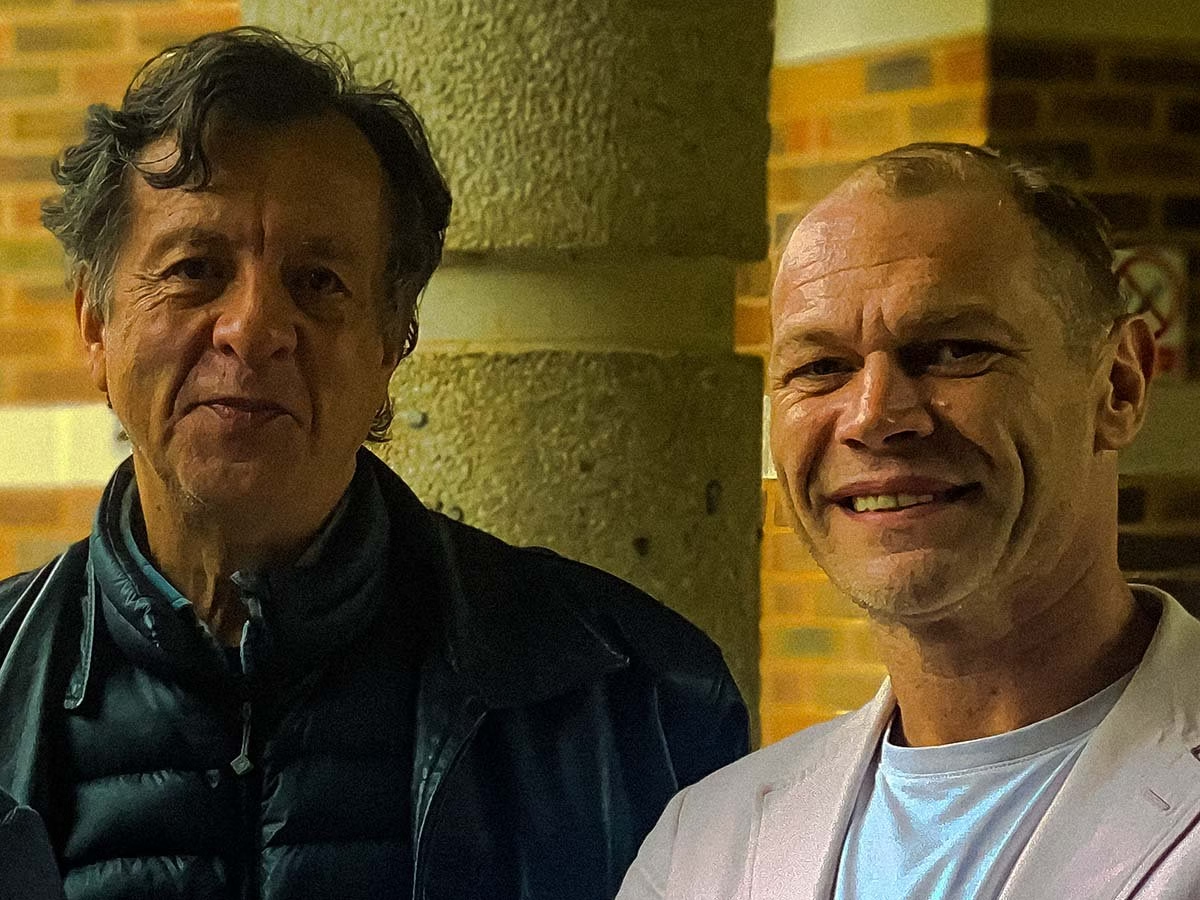
       Myself and Dr Luis Eduardo Luna at      Philosophy of Psychedelics
    Myself and Dr Luis Eduardo Luna at Philosophy of Psychedelics

    But he didn’t get there purely by publishing papers. Or with soundbites like “The Anthropocene began in 1610, when carbon dioxide started rising because of all the forest growing over the farms of a massacred civilisation. Europe is just a peninsula of Asia.”

    Instead, Dr Luna self-actualised through “direct experience” – manifesting, learning and transforming within our physical reality. 

    “Is ayahuasca addictive? No! I have taken it a thousand times”

    Born 1947 in Florencia, Colombia a city noted for its proximity to rainforest and tribal settlements, Lois Eduardo Luna was sent away to religious school to study philosophy as a boy with the hope of becoming a priest. He hot-footed to university in Madrid, Spain where he graduated in philosophy and literature. Returning home aged 21 he fell in with a Canadian traveller called Terrence McKenna (the very same). The two took yagé, a variant of ayahuasca prevalent in Colombia together for the first time.

    “Her own body is a metaphor. She is a river, a serpent, an umbilical cord”

    In 1980 Dr Luna met a Colombian vegetalista ‘plant teacher’ Emilio Gomes. The shaman told him, “Everything has spirit. Everything is intelligent,” and eventually took Luna in as an apprentice. The Journal of Ethnopharmacology published Dr Luna’s fieldwork paper The Healing Practices of a Peruvian Shaman in July 1984. The abstract (introduction) reads, ‘The basic ideas of his cosmovision are presented… attention is given to the concept of “doctor” or “plant teacher” applied to certain plants which are supposed to “teach medicine”, if the appropriate conditions of isolation and diet are observed… During the period of isolation the spirits of these plants teach the initiate certain melodies or “icaros” that he will later use when practising his shamanistic activities.’ The accompanying film Don Emilio and his Little Doctors is “probably the first ayahuasca documentary,” he says proudly but with signature charm. His first book Vegetalismo was published in 1986 and Luna was made an associate of the Botanical Museum of Harvard University.

    “There is more healing in connection, outside in the forest among the trees”

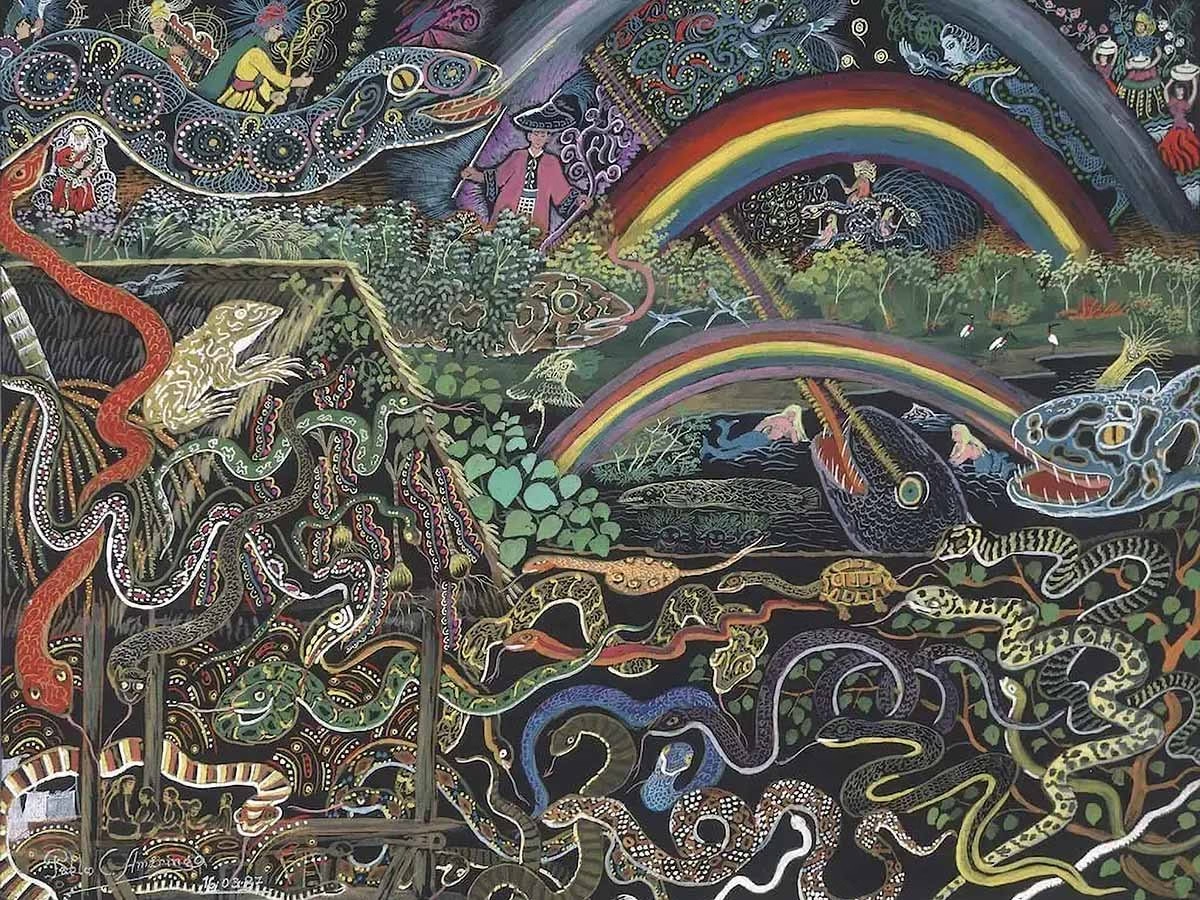
    Not soon after Luna came across a distinctive Peruvian artist named Pablo Amaringo, who painted beguiling scenes of plant medicine ceremonies and their accompanying visions. The pair took ayahuasca art to the world, with Luna arranging global exhibitions and persuading the Finnish government to open an art school where 300-plus mestizos, mixed heritage, children received tuition. Luna still acts as agent for authentic trade of Amaringo’s works

    During the late 1980s the action switched to northern Europe, where Luna studied for a Phd in Helsinki and Stockholm, then took up a post lecturing at The Swedish School of Economics in Finland. Synchronicity abounded when he discovered a predecessor in the same role was theological firebrand Rafael Karsten, who wrote one of the first ever detailed accounts of Amazonian plant medicine ceremonies in 1935’s The Head Hunters of the Western Amazoas

    Now Professor Luna, and a globe-trotting ayahuasca ambassador with several books under his belt, he was invited to visit Rustler’s Valley in South Africa, an Earthrise Trust alternative community. Also visiting, coincidentally, was permaculture pioneer Bill Mollison who informed him how miniature organic ecosystems can be created. Luna also met Dale Millard, an adventurous anthropologist who introduced Dr Luna to nearby African tribespeople who told him they too had plant teachers of their own. Dozens, in fact.

    “Everything has spirit. Everything is intelligent”

    Inspired yet again, Dr Ludo struggled through the woes of doing business to build Wasiwaska Research Centre. It’s a breathtaking psychedelic nature reserve and ceremonial paradise, on a tip of the agreeable archipelago of Florianópolis, Brazil. Most of your favourite international space heads are hanging out there: maybe tapping some of the many ayahuasca vines for some sap syrup, taking a perambulo around the exotic selection of rare psychoactive plants with far-out flowers, having some reflective time in the library with a cup of kava-kava, or simply watching the marmoset monkeys get high. 

    “Therapy is narcissistic, ‘me’, going inside,” says Dr Luna, “There is more healing in connection, outside in the forest, among the trees. Depression is caused by not connecting.”

    Check out Wasiwaska in Dr Luna’s presentation of its gardens at Exeter University where he’s a research fellow, his autobiographical and philosophical keynote speech Decolonising the Self at Exeter’s 2022 Philosophy of Psychedelics conference, and much more on the New Psychonaut YouTube lecture channel.

    Here’s what’s in this week’s issue of your directly experienced Vital Student Zine: