Tag: Clinical

  • Trauma, addiction and MDMA therapy with Dr Ben Sessa

    Trauma, addiction and MDMA therapy with Dr Ben Sessa

    My unofficial Vital Study Zine #14 with observations from Vital Psychedelic Training and recent happenings in the space
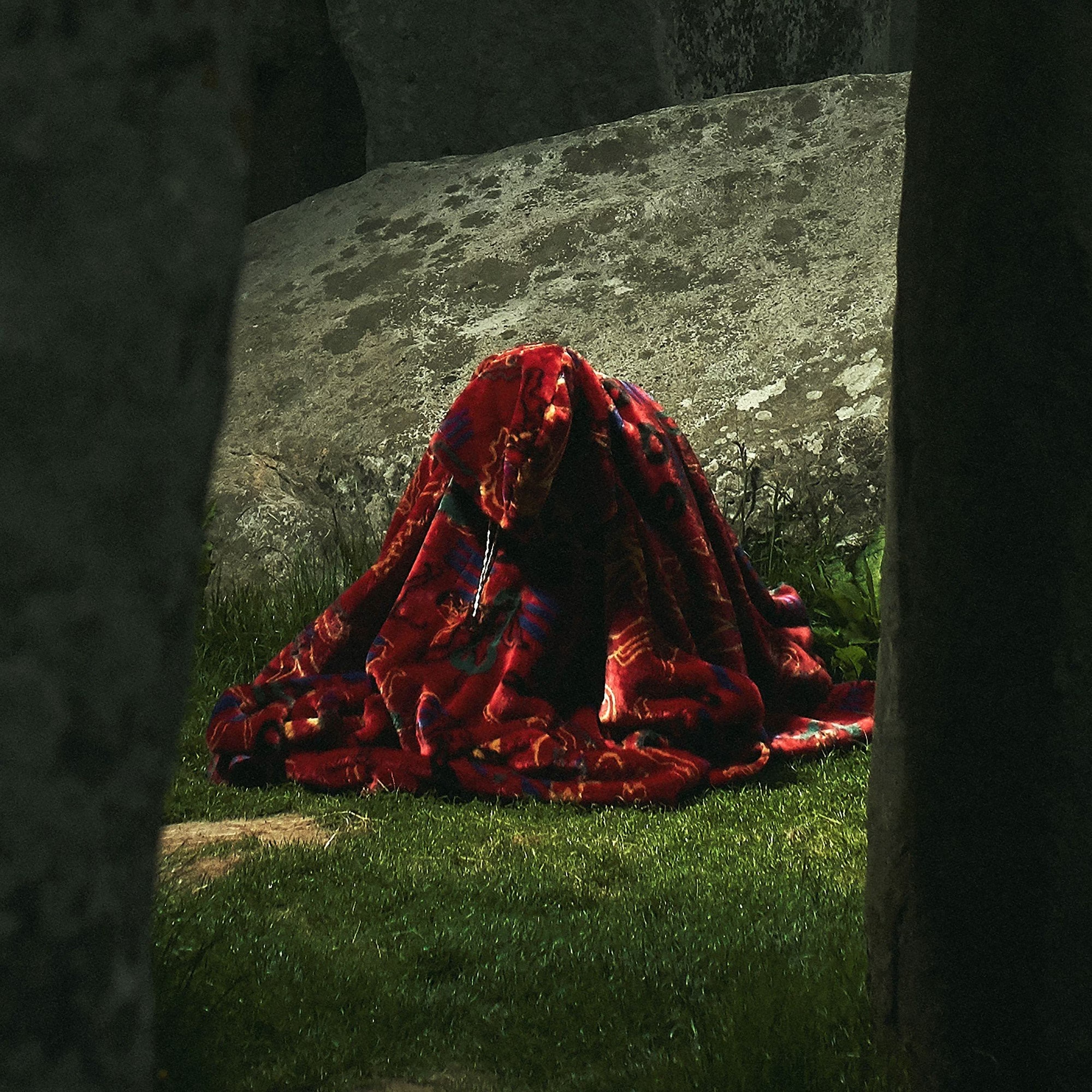
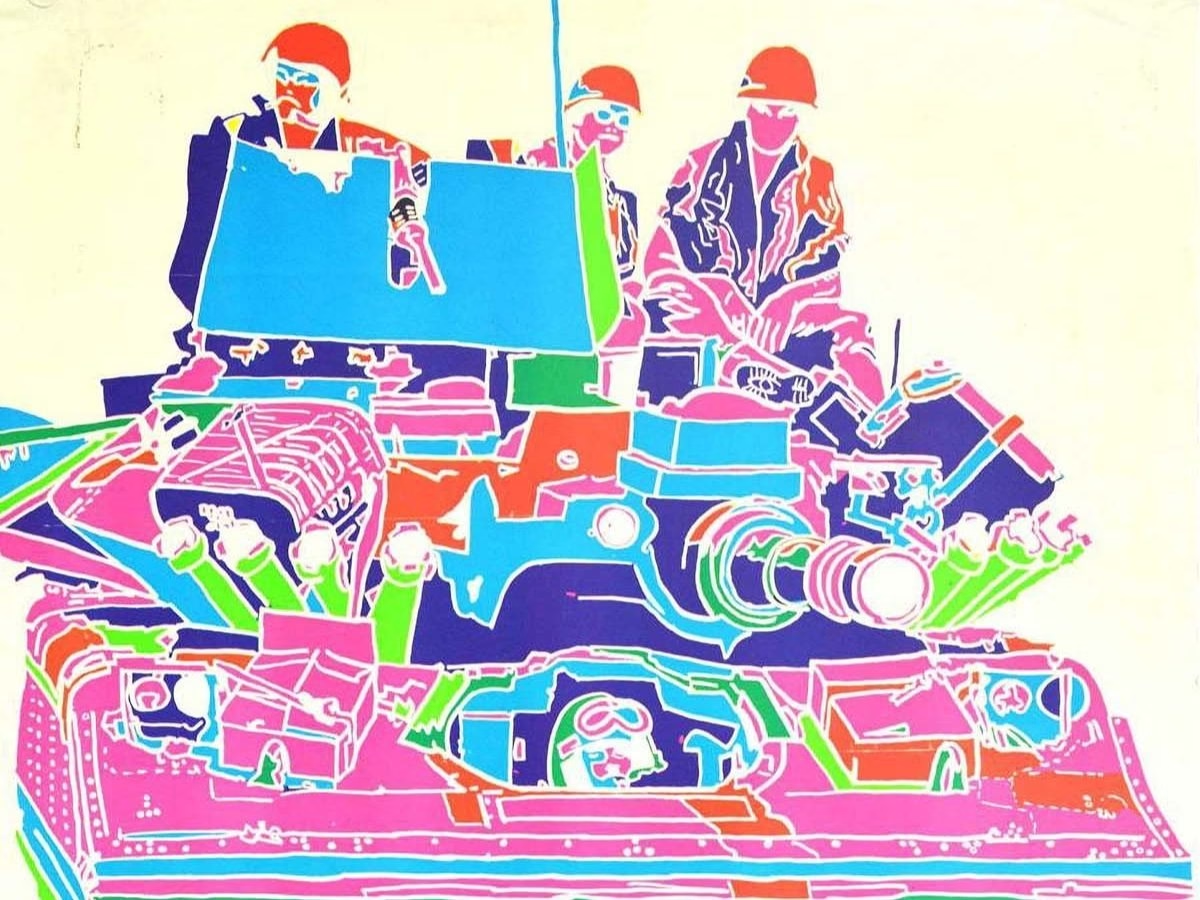
        Jimmy Cauty, ‘Riot Shield’
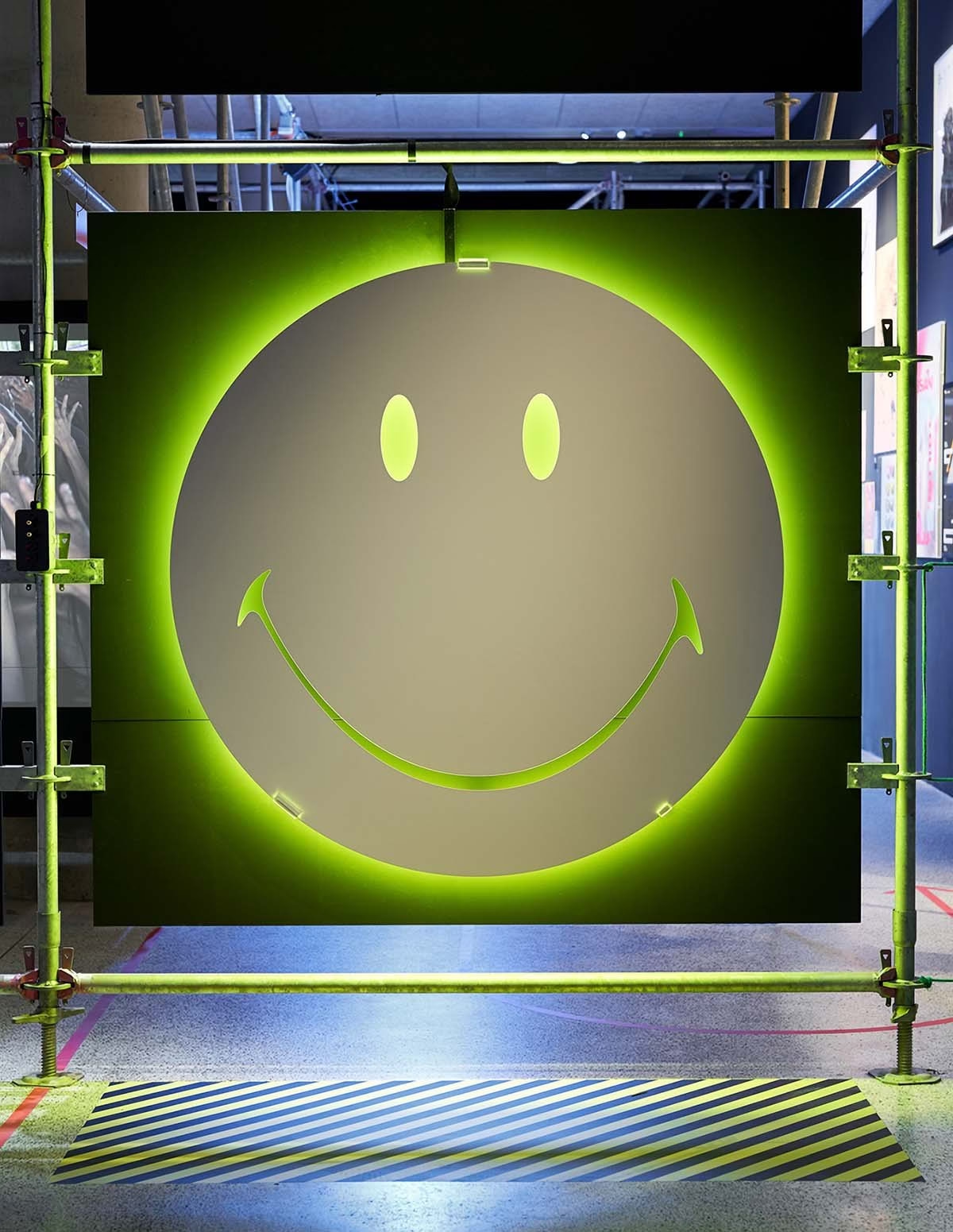
    Jimmy Cauty, ‘Riot Shield’

    Dr Ben Sessa’s book The Psychedelic Renaissance acted as exactly that.

    The agenda for a new Albion is effectively a ‘hypersigil’ – the gnostic term for a creative work that somehow manifests its content. These effects even included the buzz phrase the proceeding new era of research was awarded.

    Debuting a decade ago, The Psychedelic Renaissance contained ideas Sessa first officially voiced in a presentation to the Royal College of Psychiatrists in 2006. LSD hadn’t been mentioned in its halls for over 30 years.

    Since The Psychedelic Renaissance took psychiatry by storm Dr Sessa has hardly been flouncing around in a kaftan. He’s living the experience, conducting frontline child trauma and addiction treatment… including acting as lead psychiatrist on the Bristol Imperial MDMA for Alcoholism (BIMA) project, where patients relapsing into heavy drinking were cut to a rate of 21% from the 73% who do so despite trying medications, 12-step and conventional therapy.

    BIMA research took place at leading clinic Awakn, co-founded by Sessa in Bristol, UK. It’s now listed on the NEO Toronto stock exchange and has hooked up with David Nutt’s Drug Science. The Mithoefers are on Awakn’s advisory board. Celia Morgan is head of ketamine assisted therapy, an area where Awakn just received 66% of new funding from the UK government and licensed its staggeringly successful ‘Project Kestrel’ design to US chain Revitalist.

    “I resent the assumption this is all about money. My job is getting the maximum amount of psychedelics to as many people as possible”

    Sessa is an avid member of the psychedelic ‘subculture’ too. In 2015 he co-founded and ran the Breaking Convention conference that showcases the space’s sharpest upcoming minds. His children are named Huxley, Jimi and Kitty.

    I’ve noticed during academic presentations that after their personal intro is over it’s de rigueur for presenters to, if they’d like, admit to any horrendous biases.

    Prostrate before you, I make clear: Dr Sessa is my age, lives and cheerleads for my home town, and confesses to an achingly middle class upbringing that includes winter sports and bedroom DJing… so there’s ‘similarity bias’ there. Moreover: only in the past few weeks I discovered he wrote a column for a hipster magazine I was founding editor of that’s having a bit of a moment now, and made a cameo in a Channel Four sketch show I wrote on. 
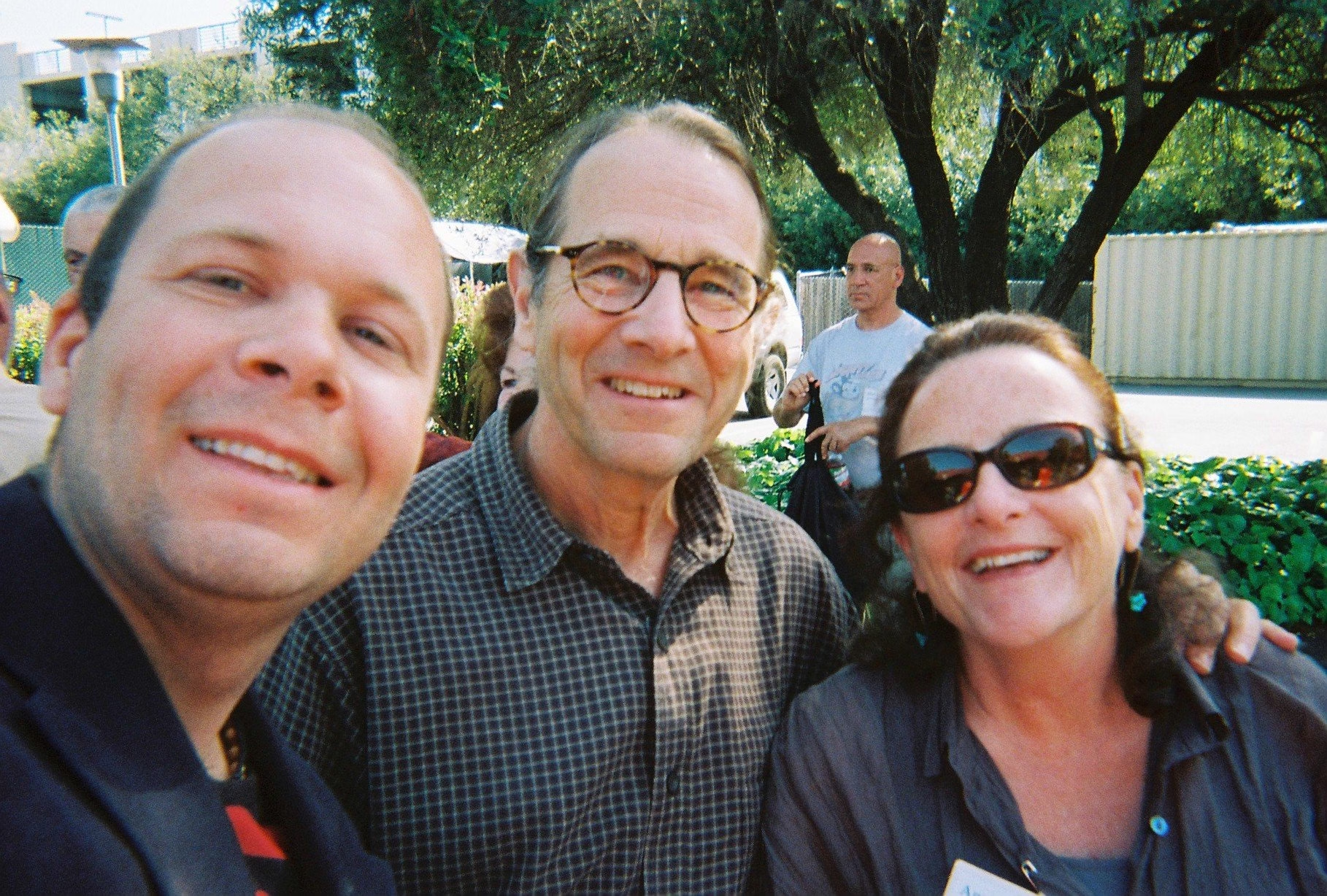
       Myself and Dr Ben Sessa (right) at Breaking Convention 2022
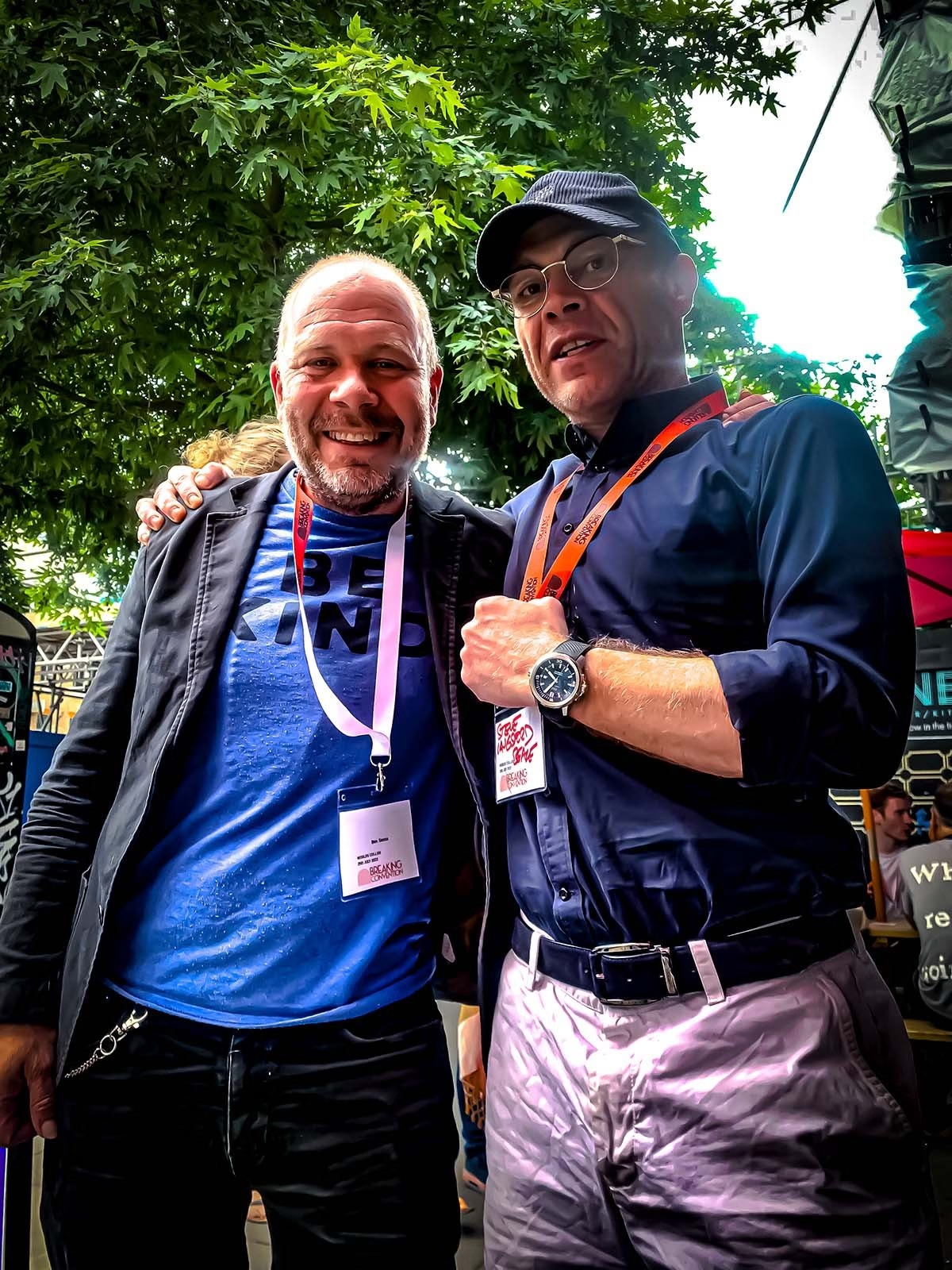
    Myself and Dr Ben Sessa (right) at Breaking Convention 2022

    So don’t ask me to justify statements like ‘Sessa is our generation’s admittedly unlikely Leary or McKenna’, and yes, I am calling that with this blog post. Instead ask Vital students, whose reactions to Dr Sessa ranged from “That was my favourite presentation so far” to “You’re the most interesting person to hear from in psychedelics right now” and “This has me so excited and hopeful for the future of this space!”

    Whilst actually being the closest thing we do have to Timothy Leary or Terrence McKenna – closest rival Robin Carhart-Harris has recently zhuzh’d up his look just to keep up – Sessa has succeeded in ushering in a revolution where the two counterculture icons failed.

    “This is the psychedelic era. Here. Now. We’re living in it,” he decrees to Vital’s class of ‘22.

    “Following medicalisation the psychedelic underground is richer and freer than ever”

    How has Sessa made this happen? By following his own advice in the closing pages of The Psychedelic Renaissance.

    ‘An unfortunate but necessary truth is that professionals working in this field must remain as boring and staid as possible,’ he solemnly advised in those very pages, ‘as well as inspirational and enthusiastic – to get the message across. I do not say all of these dull and conservative things because I lack imagination or fail to appreciate the fun, wonder and spirituality of the psychedelic experience. On the contrary, I welcome and embrace it.’ 

    This trademark approach of blowing minds by stealth doesn’t stop him racking up a ton of newspaper credits, where he lays down psychedelic law (and lore) in a fashion also quite dissimilar to his predecessors. 

    In fact, only this year at 2022’s Breaking Convention he decimated criticisms of corporadelia at his £6K per programme Awakn clinics with: “I resent the assumption this is all about money. My job is getting the maximum amount of psychedelics to as many people as possible, and researching that is very costly. There will still be raves, festivals, ceremonies. The psychedelic underground is richer and freer than ever post-medicalisation.”

    Dr Sessa is a boon to journalists. Here’s a few choice quotes from his week fourteen Vital lecture:

    “There’s nothing more dangerous than drinking a bottle of vodka a day” 

    “Then they go back on heroin, or other far, far more dangerous substances like alcohol” 

    “Three quarters of a million people in the UK take ecstasy every weekend and our hospital wards are not full of casualties” 

    “I’m not that spiritual a guy, but I’ll talk to patients about kundalini and chakras till the cows come home. They do also want to talk about things like how to get their children out of social services care”

    Here he is on NBC with MAPS’ The Mithoefers talking about their slot on Netflix’s How to change Your Mind, showing ITV viewers around Awakn, plus watch his TEDX Talk on psychedelics as antibiotics, explain childhood trauma and MDMA therapy and more on the New Psychonaut YouTube lecture archive.

    Here’s this issue’s contents arranged along Vital Psychedelic Training’s five learning themes:

    Next issue: Vegetalismo author Dr Luis Eduardo Luna of Wasiwaska Research Centre

  • Indistinguishable from magic

    Indistinguishable from magic

      Approach
    Approach

    Dr Ben Sessa’s greatest conversation stopper: psychedelics are a ‘psychic antibiotic’ capable of statistically curing mental diseases

       Novotak   , ‘Daydream Version Six’
    Novotak , ‘Daydream Version Six’

    “Psychiatry is a pretty desperate and miserable place to work.”

    Dr Ben Sessa’s been at the frontline of mental health services since 1997, and deserves a rant. “Where are we going wrong? We’ve had modern psychiatry around for 100 years. And we’re not getting the kind of clinical outcomes we want,” he opines, “younger people get given the SSRIs, can’t work the therapy, and kill themselves.”

    ‘Psychic antibiotic’ is another of Sessa’s bravura catchphrases. Mental health treatment’s in a miserable state of affairs comparable to general medicine in the late 1800s, says Sessa who first presented his vision that psychedelic medicine could be revived to the Royal College of Psychiatrists in 2006.

    “Doctors were losing the battle to the infectious diseases, leprosy, smallpox, tuberculosis, people dying post-operatively,” he continues, flexing his storytelling skills in a swaggering lecture, “Back then, were very good at our statistical analysis and epidemiology too. We knew that people were dying, but it wasn’t clear what was going on.”

    Things changed when a joint German-Japanese team discovered a cure for… syphilis in 1908, and Nobel prizes ensued.

    “Where is our treatment that gets to the heart of disorders?”

    ‘Antibiotics’ as they were called, ‘cos they killed bacteria, include any micro-biological treatment for bacterial infection, not just other bacteria bred to fight against their microscopic kin.

    Penicillin, invented by Sir Alexander Fleming in 1928, is derived from a fungus secretion… just saying. Specifically a mould, which are traditionally used for their anti-infection properties.

    “Where is our antibiotic?” bellows Sessa in the general direction of the gods, “Where is our treatment that gets to the heart of disorders, and actually cures them? We write these voluminous tomes,” he continues, hitting his stride, “The ‘DSM’ and ‘ICD’. We track who gets depression, and anxiety, and eating disorders, and personality disorders, and addictions, and affective disorders,” here it comes, “…but we’re not very good at treating them.”

    Dr Sessa’s allowed to ham it up like this because he is legit as any clinician, researcher or spokesperson.

    “The idea that healing patients would be a bad business model is sick”

    It’s almost like the anthropology reports from the Amazon… where researchers are struck by the animist doctrine that you’re only allowed to talk shit about stuff you’ve actually done…

    Tell us why our ailments continue to vex us so, oh unlikely shaman returned from the darkest depths of the forest with knowledge?

    “Because we treat them symptomatically,” answers Dr Sessa, “We provide a whole plethora of daily maintenance drugs that mask the symptoms. Which the pharmaceutical industry queued up to provide us with.”

    Yet there is hope. Way back in 2012’s breakthrough Psychedelic Renaissance, Sessa’s book which coined the phrase, he was already declaring psychedelic medicine the ‘psychic antibiotic’ that his profession and his patients crave.

    In his Vital presentation during the course’s second module covering psychedelic therapy styles, Sessa beams with pride after battering his return key to reveal a graph showing MDMA-AT thrashing a combination of the best anti-addiction treatments money can buy, plus 12-step and more, by a 73% to 21% recovery rate.

    “We’re not going to cure everyone and therefore put ourselves out of business”

    Sessa’s surging Awakn chain though, is a listed company. Like other private medical providers, doesn’t he have a duty to shareholders to drag treatment plans out too?

    “The idea that healing patients would be a bad business model is sick,” and he doesn’t mean in the same way he dryly describes my wannabe-hipster home town of Bristol as ‘extremely sick’ in his introduction, “sustaining poor treatments with poor outcomes in order to maintain a customer base is absurd.”

    Accident wards don’t keep your leg held up in traction forever. “There’s plenty of work out there for orthopaedic surgeons mending broken legs,” explains Sessa to an enquiring Vital student in the Q&A, “plus there are plenty of people out there who could do with their mental disorders being completely cured. We’re not going to cure everyone and therefore put ourselves out of business.” 

  • Behind the mask

    Behind the mask

      Therapy
    Therapy

    MDMA provides lasting respite for the traumatised

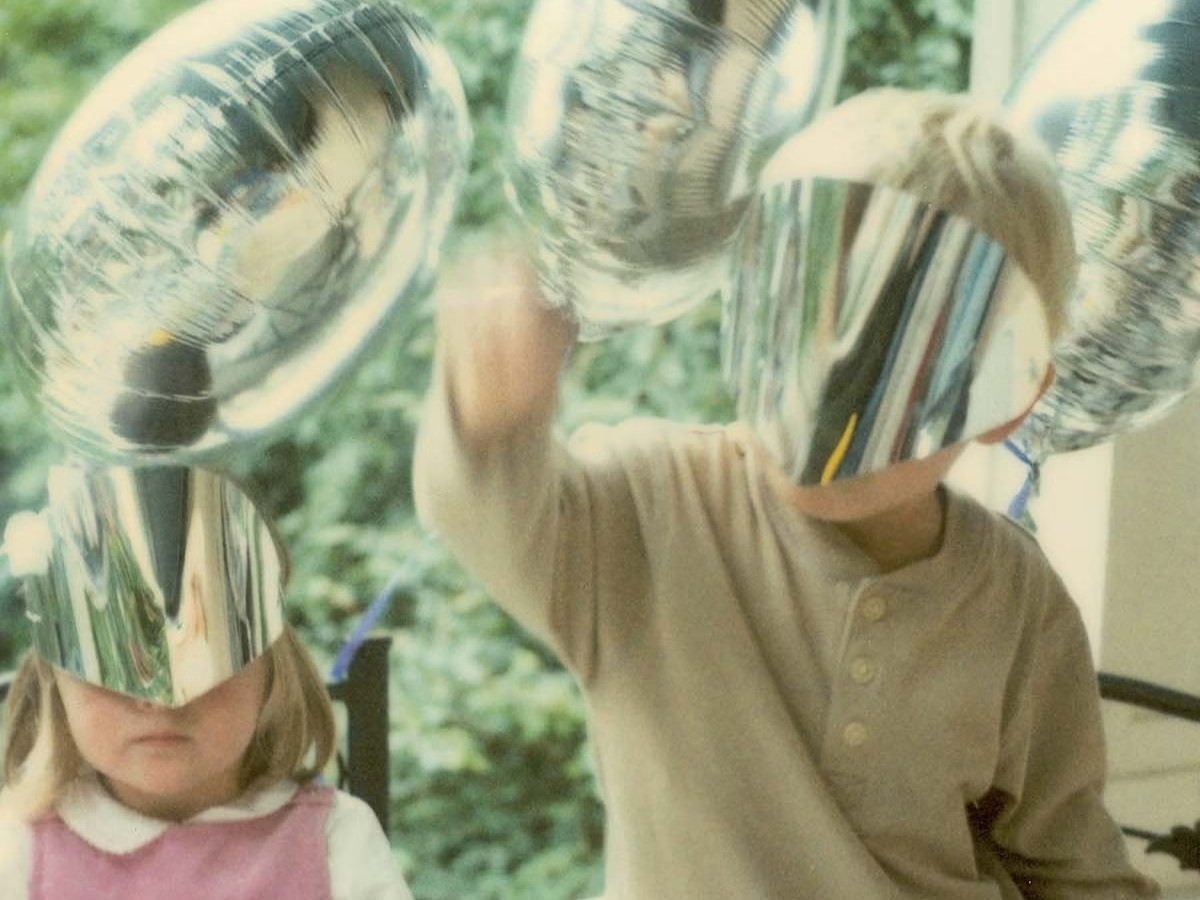
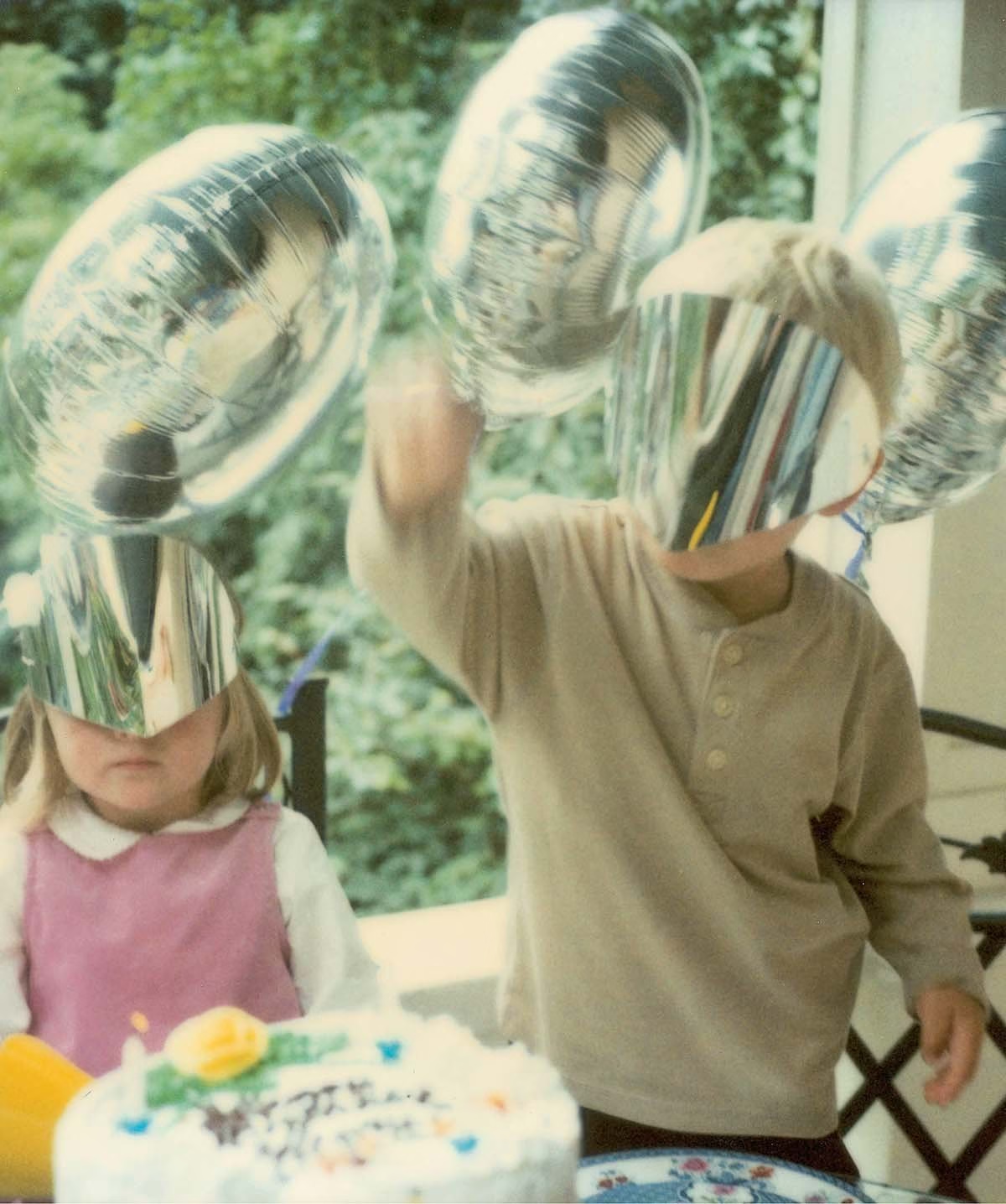
       Stefanie Schneider,      Boy with Silver Mask (Stay) Photograph
    Stefanie Schneider, Boy with Silver Mask (Stay) Photograph

    MDMA’s ideal for therapy because it can “rebrand your sense of self.”

    Shame and trauma dance a ghostly tango. An ostracised alcoholic is merely the grown-up version of the abused child we clutch our perals over. Or so says child psychiatrist and leading psychedelic researcher Dr Ben Sessa, presenting to Vital students.

    “Abused children generate tremendous sympathy,” says Sessa alluding to many high-profile court cases in the UK during lockdown and beyond, “but once the same abused child turns to addiction, they’re written off as a filthy smackhead, or an alcoholic.” Reported child abuse cases rose a staggering 1493% at one point during the C-19 lockdowns.

    Dr Sessa has worked as a child psychiatrist since 1997. But not just with under-16s. He’s taken his knowledge of childhood trauma and applied it across the all-too-adult issues it causes later.

    “Existing drugs are not treating the base disorder – trauma”

    Like alcohol use disorder (AUD) for example. 

    “I naturally take a very developmental approach to mental disorder,” he says, “I think that every adult psychiatrist should spend some time as a child and adolescent psychiatrist, because we really do grow up to become our parents. And those things that we learned in those early years – ‘Even my parents can’t love me, I’m useless, I’m a failure, I can’t achieve’ – become a blueprint for the rest of our lives.”

    Childhood trauma operates on a scale ranging from forced labour and sustained sexual abuse, to simply growing up in a rigid suburban household where neurotic parents act out their frustrations with a shaming communication style featuring ‘too many shoulds’. 

    “I deliberately lump together childhood trauma, post traumatic stress disorder, complex post traumatic stress disorder, and addictions,” explains Sessa, “it’s very difficult to treat these, and there’s no single approach.”

    The trajectory from trauma to addiction draws on John Bowlby’s attachment theory and research from the past decade or more connecting PTSD to substance abuse. Attachment theory suggests that maladaptive adult behaviour is more likely to be caused by issues between a baby and its mother and other environmental factors including poverty. This contradicts established psychoanalytic narrative, which says it’s all about… the oedipus complex, and other aspects of thanatos, the Freudian ‘drive’ to act according to one’s most selfish, basest urges.

    Despite being head of The Tavistock Clinic’s child psychology department from the mid-1940s, Bowlby’s ideas were still being rubbished by the establishment in the 1990s.

    “If you’ve had an insecure attachment to your parents, you develop these neuro-protective narratives: ‘I’m bad, I can’t achieve, I’m unlovable, the world is dangerous’,” explains sessa, “By the time you’ve been thinking like this for ten, twenty, thirty years you truly believe it. This is why mental disorders become chronic, lifelong unremitting problems. Faced with it, the safest and simplest way of dealing with it is to numb yourself, block out the world with sedating dangerous substances like heroin. And far more dangerous ones… like alcohol.”

    Like in the USA, there’s currently no pharmacological prescription for PTSD available in the UK. Nor alcohol use disorder; in the United States only 4% of AUD sufferers are given a medication.

    “We have what we call ‘polypharmacy’,” explains Sessa, “If the patient’s depressed, we’ll give them an antidepressant. If they can’t sleep, we’ll give them a hypnotic. If they’re constantly anxious, we’ll give them an anxiolytic. If their mood goes up and down, we’ll give them a mood stabiliser. If they are hyper-vigilant, one of the core features of PTSD, if this spills over into paranoia will give them an anti-psychotic. And of course, you have to keep taking these drugs day-in, day-out as maintenance medications for the rest of your life. None of these different classes of drugs are curing the patient. They’re not treating the base disorder – which is trauma.”

    Here in the UK psychiatrists (doctors prescribing drugs), clinical psychologists (NHS trained psychoanalysts who have lots to do) and psychotherapists (talk therapists of wildly varying quality, without medical training) have long existed seemingly independently of each other.

    Personal and financial resources are required to tackle one’s mental health with impact.

    “Pharmaceutical MDMA is 99.8% pure and very expensive”

    I’d recommend medication, psychoanalysis and psychotherapy. But as a customer myself I know it doesn’t come cheap. The experience can be arbitrary too.

    “After 30 years in psychiatry, my opinion is that psychotherapy boils down to a relationship between the patient and the therapist, and an ability for the patient to talk about their pain,” claims Sessa with authority, “that’s fine for around 50% of people with trauma based disorders.” 

    But not nearly for all.

    “A significant half, they cannot go there to talk about their pain… they will do anything but talk about that night when they were ten years old, and their grandfather came into their bedroom,” says Dr Sessa.

    Many therapists are understandably not fully prepared to deal with angry, impenetrable PTSD cases with substance use disorders and co-morbidities like ADHD.

    “Trauma victims drop out of therapy. We have high rates of self harm and suicide, and very high rates of addictions. There’s a 50% treatment resistance in PTSD. After detox, 70 to 90% of addicts are back on the substance again.”

    Combining psychiatry and psychotherapy sounds like common sense. But it’s practically unheard of. “The therapy alongside the MDMA makes the difference,” says Sessa pointing out that his clinic Awakn doesn’t offer its current ketamine programme without accompanying talk sessions.

    Awakn conducted its BIMA – Bristol Imperial MDMA for Alcoholism – project under research trial conditions, so while the process mirrored a regular treatment programme with genuine sufferers they didn’t pay and regulations were fiercely adhered to. Pharmaceutical MDMA was used, “it’s 99.8% pure and very expensive,” says Sessa. 

    MDMA’s cocktail of positive therapeutic effects include a melodic duet between the amygdala and frontal cortex, where the amygdala ‘fear response’ shrinks while activity in the advanced brain grows, providing an ‘optimal window of arousal’. MDMA’s empathy-increasing properties, generated by production of the hormone oxytocin, strengthen the bond between therapist and patent.

    “Elements of transpersonal psychotherapy were used during the drug sessions”

    The ‘peak experience’ though remains key for softening the calloused neural pathways that dictate repeated cycles of dysfunctional behaviour, like addiction in particular. 

    “You can’t just tell someone ‘stop thinking like that’. Chronic unremitting mental disorder is all about ‘stuckness’. It becomes your version of yourself.” Decades on from the original trauma, “Something otherwise relatively benign happens in the queue at the post office and you have a panic attack,” illustrates Sessa. 

    BIMA’s eight-week course Sessa describes with characteristic honesty as, “‘MDMA assisted psychotherapy for the treatment of alcohol use disorder’, which is perfectly accurate. It’s never been done before; we were making it up as we went along.”

    For MAPS-trained Sessa and his prodigal collaborator Dr Celia Morgan (named by Business Insider as one of the ‘Women Shaping the Future of Psychedelics’) this meant drawing on their wealth of experience carving out the Psychedelic Renaissance over the past 20 years, rather than riffing.

    “Of course it was more nuanced than that. We had elements of transpersonal psychotherapy we used during the drug sessions; we used a lot taken from the maps manual for PTSD.” 

    All the subjects were daily heavy drinkers who had been through detox. Talk therapy in the ‘non drug’ sessions, a total of 15 around three MDMA ‘trips’ drew from their experience at the forefront of addiction treatment: “We used elements of Acceptance and Commitment Therapy, Motivational Enhancement Therapy, and CBT [Cognitive Behavioural Therapy], which were typical for addiction studies. We are of course writing the manual for this, and will be using it as we move into Phase 2B.”

  • Ravers score rare victory over Mondays

    Ravers score rare victory over Mondays

      Medical
    Medical

    The Awakn formula to avoid notorious MDMA comedowns: peak early and don’t skimp on quality

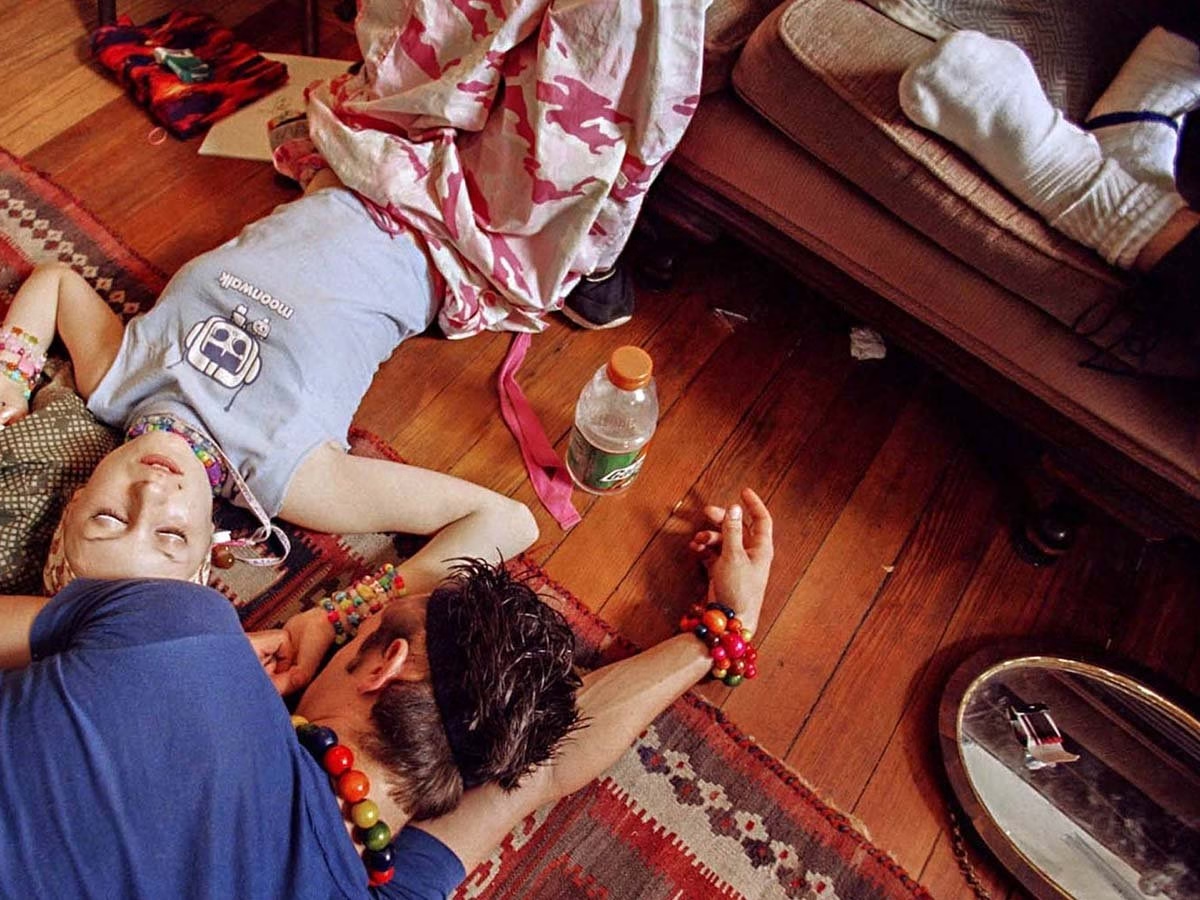
        Scott Houston     , ‘Party Kids at Dawn’
    Scott Houston , ‘Party Kids at Dawn’

    In 40 years there’s been no single serious reaction to MDMA in clinical setting.

    Doses taken are 125mg and up, about half the size of a respectable ecstasy pill. But “It’s 99.8% pure, and very expensive,” says Dr Sessa of his MDMA stash.

    Alongside a 9:30am start time, measured hydration, and overnight stays in the chic surrounds of an Awakn clinic, the integrity of the substance is one of the many reasons why Dr Ben Sessa reckons MDMA comedowns don’t exist. Just like your mate, ‘Hardcore Mandy’.

    Sessa didn’t exactly say ‘Comedowns don’t exist’ in his December 2021 report Debunking the myth of ‘Blue Mondays: No evidence of affect drop after taking clinical MDMA.

    “Take it during the day”

    In fact, like he does say in the proceeding war of words on the letters pages of The International Journal of Psychiatry (which is a pretty cool thing to be having anyway) after the article appeared:

    ‘We were not stating that ‘Blue Mondays’ do not exist in recreational user populations. Quite the contrary, they do. In respect of power: across 26 clinical MDMA sessions, we did not elicit one single report of acute comedowns. All participants reported no negative disturbance to affect at the end of the day after taking MDMA as the drug wore off. No comedowns. This is a highly significant outcome over 26 separate sessions with clinical MDMA.’

    The notorious ecstasy ‘comedown’ where ravers feel considerably less clever on the morning commute than they did atop a riser earlier in the weekend, is likely due to sleep deprivation, over-exertion and dehydration.

    “People often ask, what about comedowns?”

    Plus combining recreational MDMA with whatever ravers can get their hands on at 7am, Dr Sessa told Vital students. 

    “Every weekend, three quarters of a million doses of ecstasy are taken in the UK, yet our wards and clinics and outpatient departments are not full of ecstasy casualties. That is a data driven,” he explains, “People often ask, ‘What about comedowns? Recreational ecstasy users describe all kinds of flowery terms to describe this: blue Monday, black Tuesday [usually the worst I find], suicide Wednesday. We saw no evidence of this effect drop after taking clinical MDMA.”

    “Not too quick on ‘Debunking the myth of ‘Blue Mondays’,” responded a team of Dutch psychologists in masterful pidgin english before going all n=17 on everyone and spreading a really heavy vibe over the whole session. 

    ‘For instance, were there multiple raters, and can the authors report inter-rater reliability?’ They wrote to the editor in the August 2022 issue of the IJP, ‘These questions also apply to the “list of representative questions and responses” included in Table 3. What does representative mean in this case, and how was representativeness assessed?’

    The urbane Sessa parried, ‘We feel our recent Blue Mondays article contributes positively to the field by providing a clear report of the relative lack of adverse effects seen with clinical MDMA administration in contrast with the widely reported negative anecdotes seen with recreational use… This is especially relevant given the fact that we were studying potentially vulnerable patients with significant mental and physical illness. We appreciate the criticisms about the article’s hard-hitting title, which has certainly resulted in considerable debate.’

    Dr Sessa’s valuable advice to recreational users?

    “Take it during the day,” he told readers of hoary hedonism journal Vice, “I realise that is a bit unrealistic.” The rave scene adapts nonetheless: next-gen London nightclub Printworks is built in a former newspaper printing press for total soundproofing within a central north London location. DJs play all afternoon and evening to three generations of ravers, mostly on the younger end. Closing time on the Tube hasn’t been the same since it opened in 2017. While Printworks will be demolished to make way for… commercial offices, a successor has been announced.

  • Ketamine Assisted Therapy with Veronika Gold

    Ketamine Assisted Therapy with Veronika Gold

    My unofficial Vital Study Zine #13 with observations from Vital Psychedelic Training and recent happenings in the space

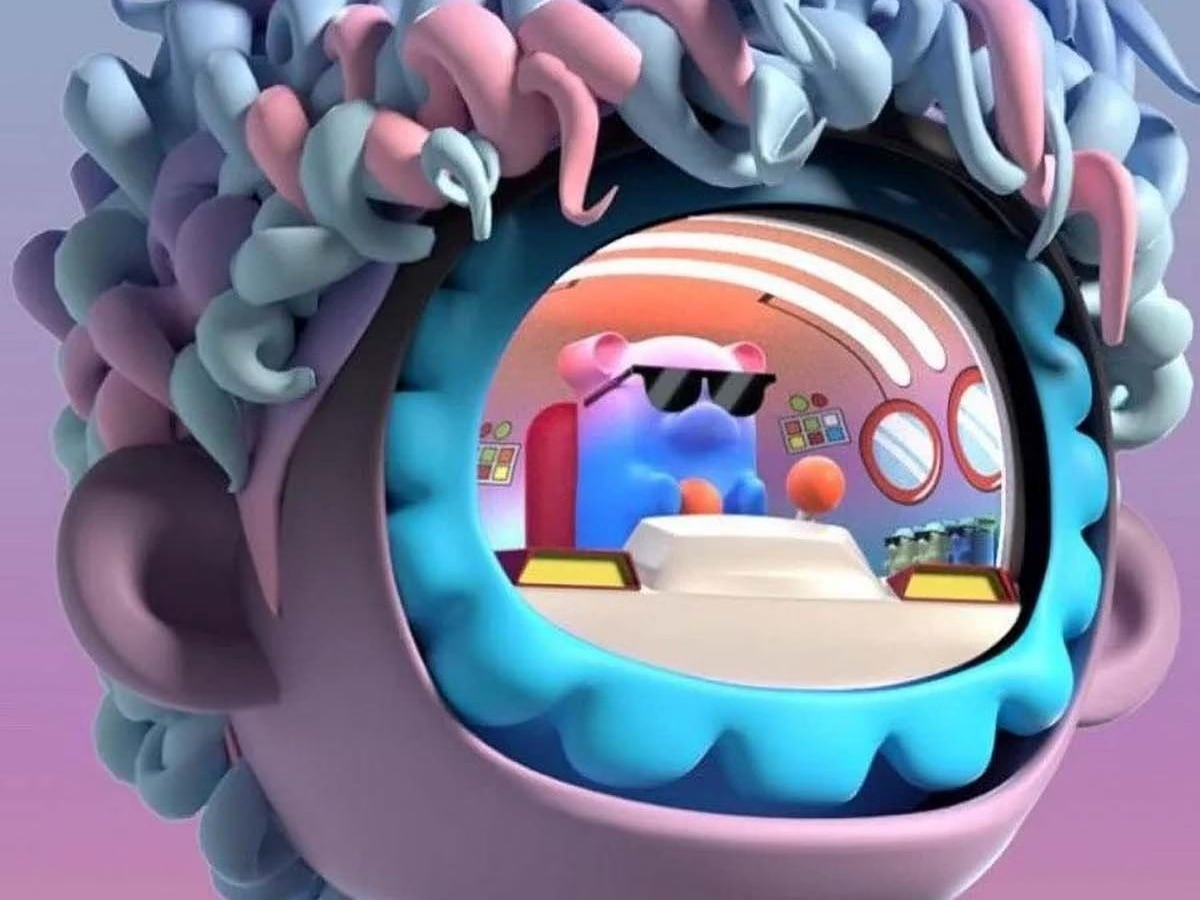
        Noëlle Matip      ‘Therapy’
    Noëlle Matip ‘Therapy’

    San Francisco’s Veronika Gold set up the Ketamine Training Centre ‘emphasising the skills unique and germane to ketamine assisted psychotherapy.’

    The MAPS co-therapist has written K treatment programs already in use across the USA. Her impressive CV includes somatic experiencing and EMDR expertise on top of academic psychology credentials. She works as an independent psychotherapist, and at stand-out San Francisco clinic Polaris Insights. Veronika has even curated a specialist ketamine therapy playlist.

    Her overview of the high street K revolution: “People get a series of sessions over to to three weeks which is usually what it takes to get the anti-depressant effect. Then they will come for what are called booster sessions: maybe every two weeks, or every three weeks, for somebody it might be four to six weeks.”

    Veronika plainly admits this is “Almost like an indefinite treatment,” but points out “for many people it’s still a preferable treatment compared to being a a daily SSRI.”

    We all love to rag on K clinics. But for the sake of successfully treating depression and alcoholism, please put snobbery to one side. Plus set-ups are likely to eventually incoporate MDMA and psilocybin treatments. So what’s happening now is a fascinating precursor to the future. There’ll be DMT on the go eventually.

    Precise therapy alongside ketamine (KAP) catalyses long term results, summarises Veronica: “The psychological paradigm has an emphasis is on processing the underlying issues and challenges that are causing the symptoms. We actually see healing and change that the booster sessions are eventually no longer needed.”

    Shamanic-style trauma processing with its ‘the only way out is through’ ethos can hit flabby westerners hard though. Not only during the experience itself but afterwards: “They have to face all the losses that were connected to being depressed after it suddenly lifts… perhaps not being able to enjoy relationships, or having relationships that are no longer working for them when they are not depressed.” If that’s anything like my own revelations after going on ADHD medication, it feels like someone else has been living in your body all this time.

    Veronika talks about her training program here, and see her on Psychedelics Today’s up to the minute ketamine therapy panel from earlier this summer plus more on the New Psychonaut YouTube Lecture channel.

    These five items I pulled from the week’s research are themed along Vital’s natural element-themed structure.

  • On the couch 2.0

    On the couch 2.0

      Approach
    Approach

    Psychedelic snobs like me sniff at ketamine treatment. But patients with lived experience say it works

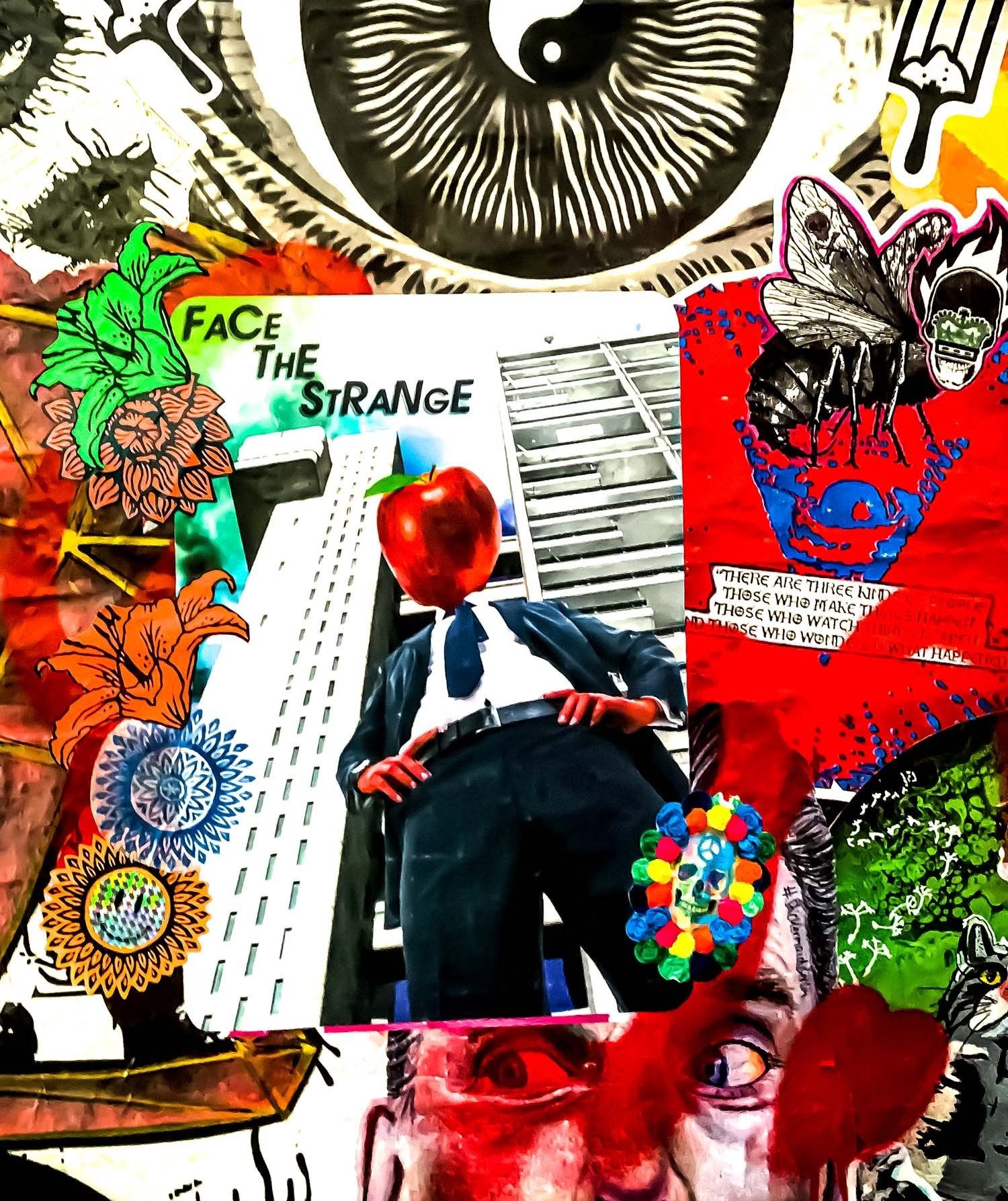
      ‘Infused Vocabulary’ by    False Negative Art
    ‘Infused Vocabulary’ by False Negative Art

    There are now hundreds of clinics in the USA dispensing psychedelic-style treatment using what we used to call ‘regretamine’ (as in “I regret having that ketamine”) and ‘ROFLcopter’.

    Depression, PTSD and addiction, including for cocaine use disorder, are the conditions treated. Novamind’s six clinics in Utah expect a more than 200% rise in patient numbers next year, up to 65,000. Waiting lists are already two weeks long for a single infusion. While Spravato’s inhalers have become synonymous, lozengers are used too and an adjustable IV drip is considered the most workable method overall.

    In her lecture covering the K-clinic phenomenon, specialist ketamine therapist Veronika Gold told Vital students that a raft of approaches are required to suit patient needs. Treatment modes range from the purely medicinal, including Mindbloom’s at-home service, to a psycholytic take where therapy takes place during the trip, to the psychedelic approach nailed down by Stan Grof where discussion occurs between guided, internal drug experiences (this is Awakn’s method used in the UK).

    However, US insurance codes cover the substance but do not currently include accompanying psychotherapy. Patients’ strong reactions to emerging trauma on early trips have encouraged many dispensers to provide a sitter for inaugural unaccompanied voyages nonetheless.

    I’m a complete snob about ketamine masquerading as a ‘psychedelic’. I can’t help but feel gaslighted by the assumption. LSD has given birth to its own rich culture of art and ideology. Even MDMA (also not a psychedelic) gave birth to rave. Where, I ask, are ketamine’s contributions to the collective imagination?

    “I was able to go into the outside world without a sense of impending doom”

    Moreover. I for one, given my own history with this particular ‘medicine’, have been less than compassionately curious as to ketamine’s therapeutic worth, in comparison to what we now have to call ‘classical psychedelics’ and indeed MDMA. Reports are varied but most are positive compared to existing treatments. Many are euphoric; others a disappointment. I’m heading off for the sharp end of guide training in a month and it feels incongruous not be getting first-hand know-how of ketamine therapy too.

      Close-up of the IV bag used in ‘Infused Vocabulary’ by    False Negative Art
    Close-up of the IV bag used in ‘Infused Vocabulary’ by False Negative Art

    Thankfully, trustworthy circle buddies have, both microdosing and the full clinical shebang. Know what? Their verdict is… thumbs-up. 

    Kelli Ann Dumas is a psychotherapist in my Vital study group. She received ketamine treatment after two decades working as a first responder in disaster zones, and with the US military abroad. While first responders do not require a PTSD diagnosis to obtain treatment in the USA, Kelli’s career has included the ‘direct threat to life’ instances this usually requires.

    “In the completing treatments rose joy. A positive, giving dynamic. Love and fire”

    She says of her symptoms, “My intrusive thoughts were of… being killed. I would live in fear of it. All the time.” 

    After the first dose, “I was able to go into the outside world without a sense of impending doom. The intrusive thinking went away. Anger was still there though. And so were panic attacks.”

    The mental room she free’d up made for a beach head to assault these deeper issues, and Kelli got to work. “Before with PTSD I felt uncommon; only tight and damaged space inside,” she reports, “As my journey went on I was able to claim more of that space internally. When I did feel anger or fear come up, I could back into myself and feel safe.”

    Powerful senses of grief and loss followed as Kelli went deeper, taking lozengers alone amongst Louisiana countryside in her beloved RV with a therapist available remotely. 

    “Love would arise instead and I saw myself journeying like I had in my earlier life – my energy crossing the land. In the completing treatments rose joy: a positive, giving dynamic… love and fire. This became solid inside of myself, instead of the fear.”

    Costly top-ups (weekly blasts add up) haven’t been necessary so far says Kelli: “When the tremble of the trauma comes I remember the call home, and am able to ride over it with my true self of dynamic proportions,” she says. “I don’t inward as much: integration with family is getting better, my exterior boundaries are getting better when faced with negativity.”

  • Consciousness expansion for the masses

    Consciousness expansion for the masses

      Therapy
    Therapy

    Do the public care about therapy with their infusion? They do when trips get intense

      From ‘K Hole’ by    Ted Vasin
    From ‘K Hole’ by Ted Vasin

    Veronika Gold has a front row seat at the new psychedelic healthcare reality.

    The family psychologist worked on ketamine treatments at Cleveland’s New Pathways before heading to SF, training with MAPS and co-founding Polaris Insights.

    Unsurprisingly, when psychedelics hit the general public it can get quite messy. Never mind your neighbours falling down the K-hole – can you explain that it’s only ego death and it’ll be alright soon? (Encounters with Anne Shulgin’s (RiP) ‘death door’ may be more complex).

    “Even if you don’t agree with areas of psychedelic therapy, like the re-living the birth process and perinatal matrices, they can come up in patients. We’ve had girls go through that process,” says Veronica, who’s KAP program has been honed by what she sees in her treatment rooms each working day.

    Accompanying psychotherapy for ketamine treatment is not covered by US insurance policies, as things stand. Over here in the UK its benefits aren’t exactly stressed by, for example, London’s Safe Minds. Besides haven’t we all gone round in circles with our psychotherapists enough by now?

    “Patients might struggle with things coming up that conflict with their established beliefs”

    Compass Pathways exec, psychiatrist and ketamine veteran Dr Steve Levine, who’s treated over 6,000 people with 60,000 infusions, urges caution over ketamine’s efficiency without therapy, and shakes his head over standards on the off-label scene. One Vital student who tried out their local K-clinic said he was very much left to his own devices. “It didn’t necessarily engage in what I would consider best practices, preparation and integration, stuff like that,” he tells Veronika in her Vital lecture Q&A, “During the higher doses, I would get lost. I wouldn’t know where it was, what was going on, or I just didn’t have any sort of focal point, even with the music.”

    A study group fellow on a series of ketamine treatments tells me anecdotally, “You get what you pay for.” Veronika is of course appalled at rookies being left alone in drab treatment rooms. Attention is important for first-timers especially, she says. 

    Most of all Veronica’s own Ketamine Assisted Therapy (KAP) program stresses flexibility. “The medicine may be too much for psychedelic therapy where they process internally, so you lower the dose and try a psycolitic approach with talk therapy while they are under a lighter influence. Or the patient could pull back from a shamanic experience where they confront the trauma, to discuss insights on a transpersonal level. They might struggle with that as things are coming up that conflict with their established beliefs.”

    It seems clinic staff need to stay light on their feet.

    “It was exciting to see that for some people, home treatment worked better”

    And, prepared.

    “We have a long intake questionnaire, we as well ask about trans-generation trauma, we ask about their birth process, we ask about you know relationships in their life, we’re asking about religious and spiritual history, discuss how they may want to be held,” says Veronika. Screening patients is key to unproductively disturbing scenes. “We have though, had referrals asking for the medicinal treatment alone who’ve had a difficult time and needed attention,” she warns. 

    “We see people moving a lot, kicking, pushing, shaking off trauma physically,” says Veronika, “patients subconsciously feel more able to do this when they‘re not connected to the IV, so switching administrations can be useful too.”

    If the unwashed masses crashing down main street on K wasn’t concerning enough, moral guardians gasped when the pandemic struck and ketamine therapy was offered… via Zoom.

    “We weren’t sure how it’s how it’s going to work,” says Veronika, “it was really exciting to see that for some people it worked better. They didn’t have to end the session at the three hour mark, get everything together to leave the clinic, have somebody pick them up or take a ride home. They were able to stay in their space.” Sounds groovy.

    Vital student and first responder Kelli Ann Dumas, who talks about her own ketamine treatment experience elsewhere in this issue of the unofficial Vital Student Zine took her later lozenges accompanied only by her two terriers, snug in her beloved RV surrounded by Louisiana woodland. She thinks it wouldn’t have been as effective without applying her own self-healing skills, which range from to participation in ayahuasca ceremonies to frontline trauma counselling work and a transpersonal psychology qualification. 

    “Pulling into the observing ego was my benefit,” says Kelli, “I’ve learned how to access an observing space, but that’s through years of yoga, meditation and eastern studies. Plus from my career I have advanced skills in narrative therapy. I don’t think someone without access to those would have as effective an experience.”

  • Psychedelic overground

    Psychedelic overground

      Space
    Space

    Rugby lads on ibogaine, reality stars in hyperreality and tarot cards swapped for toys. Turns out the revolution will be fun

       Inevitably, models gather in St Tropez for a charity fundraiser hosted by Christian Angermeyer’s      Aurora Institute
    Inevitably, models gather in St Tropez for a charity fundraiser hosted by Christian Angermeyer’s Aurora Institute

    With celebs like Sharon Osborn extolling the virtues of ketamine therapy get ready for the neighbourhood popping their heads through the door of your clinic.

    The psychedelic renaissance has flowed beyond the dinner party circuit on to the high street. Ketamine treatment is even more of a talking point than the toad thing. KAP got a shout out from UK TV’s Loose Women co-host Frankie Bridge (the striking one out of The Saturdays who had short hair) and Hello! mag went large.

    Dr Leary’s orbiting urn would spin at an angle that defied conventional physics to see trite psychedelic lifestyle design clichés replaced by… trite lifestyle design clichés.

    Sports stars have been hot on their daytime TV counterparts’ heels: gridiron megastar Aaron Rogers puts a late career surge down to ayahuasca and other football players extol psychedelic healing for concussion and stubborn injuries. Combat sports are beloved of thugs but played by gentlemen so being miles ahead doesn’t count.

    Even the middle market are getting out there. Gen-X footwear designer Patrick Cox spoke about his new life as an Ibizan 5-MEO DMT facilitator to Hadley Freeman in The Guardian this summer. Ever intrepid, Freeman ‘smoked toad’ [sic] despite her editor’s express instructions.

    A Vital study group chum undergoing ketamine therapy recently declared that sock puppets had been added to her clinic’s table of tripping props (with the spirit animal cards and crystals). She spent the session happily playing with them. 

    Maybe this doesn’t sound ‘mystical’ enough to those of us with well-thumbed copies of The Tibetan Book of the Dead

    Chatting away to the guides during the medicine experience, or wanting to go outside, can be a distraction from the work you’re there to do apparently. After you’ve come down you could be disappointed you didn’t get any of that done. I don’t disagree that it could feel like a waste of time for all concerned.

    “Wit is the ability to find hidden similarities linking two ideas which are contrasted with each other”

    But on psychedelics ‘what comes up, comes up’ to use the platitudinous truism. TV’s Dr Bill Richards, the veteran John Hopkins’ researcher featured in Netflix’s How to Change Your Mind said laughter “May be what’s needed” in his own Vital lecture.

    I rubbished Freudian psychoanalysis in issue #11 by ranting about how the only therapeutic system that’s been established as ‘fact’ for 100 years has poisoned our intellectual conversation and our mental healing.

    Turns out Freud wrote about the importance of humour in 1905’s The Joke and its Relation to the Unconscious. Before putting pen to paper he took the opportunity to discuss the subject with hilarious cards from his Viennese social whirl.  The many positive conclusions included, ‘Wit is the ability to… find hidden similarities… linking two ideas which in some way are contrasted with each other.’

    Laughter is the yang of meditative, non-dual understanding’s yin. The unconscious plays a leading role both in devising clever quips and responding to them in real time, without conscious analysis. On top of healing relational trauma, laughter and play in adults are also ‘positively correlated’ with increased sociability, spontaneity, tension release, innovation, de-stressing, longevity, immunity, energy levels, teamwork and parasympathetic nervous system activation

    “Whether I was crying or laughing, was not too important”

    And never mind the cave paintings, because psychedelics gave us jokes. The 2021 research paper Psychedelics, Sociality, and Human Evolution says, ‘In particular, the interpersonal and prosocial effects of psilocybin may have mediated the expansion of social bonding mechanisms such as laughter, music, storytelling, and religion.’ 

    LSDExperience.com a compendium of the finest, trip writing includes this anonymous quote: “Whether I was crying or laughing was really not too important, except on the conventional level. The important point was that the tree of my emotions was being vigorously shaken and liberated of some withered leaves which had hung on too long.”
    Spiritual emergencies, fearful reactions, and sudden life changes are likely to be of more concern for ketamine entrepreneurs and therapists than the number of mystical versus humorous experiences per week going down in their clinic. But not for nothing does the Bible call humour ‘the best medicine.’ It could be comparable to spirituality, or philosophy for coming to terms with complex and contrasting themes.

    At dinner, or on the high street.

    It’s legislators who seem out on the fringes now.

  • MDMA Assisted Therapy with Michael and Annie Mithoefer

    MDMA Assisted Therapy with Michael and Annie Mithoefer

    My unofficial Vital Study Zine #12 with observations from Vital Psychedelic Training and recent happenings in the space

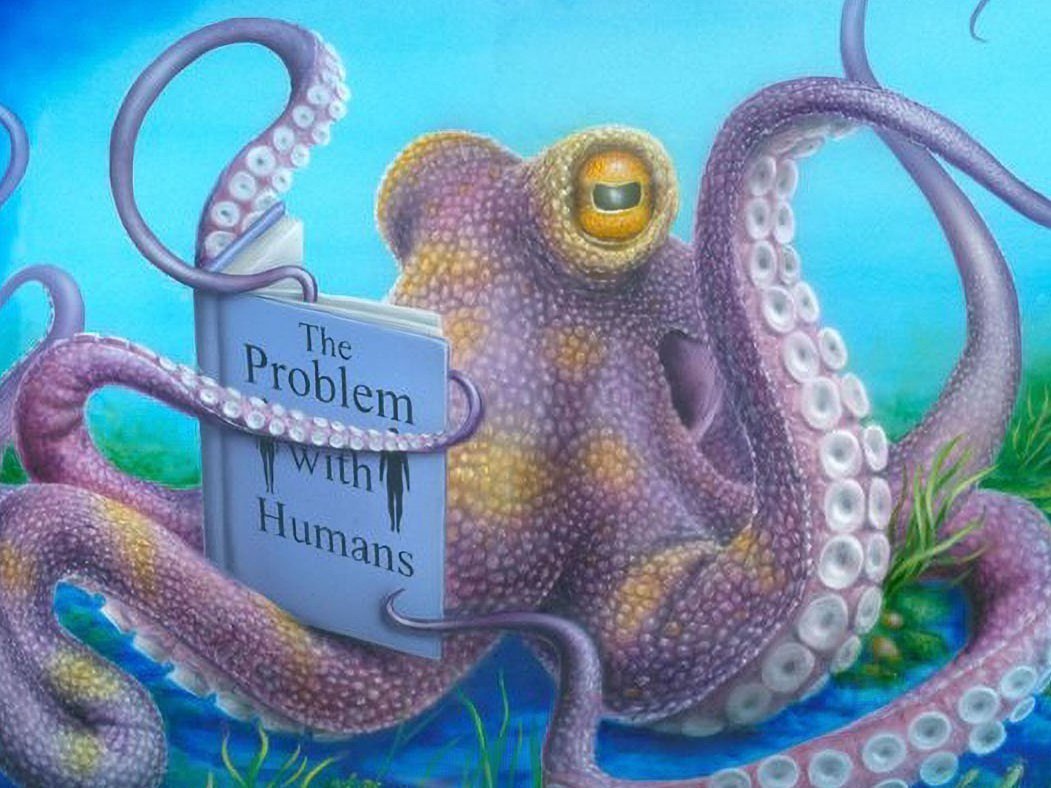
        Jeremy Deller,      ‘The Problem with Humans’  available here
    Jeremy Deller, ‘The Problem with Humans’ available here

    Gotta love MAPS PBC, the Multi-Disciplinary Association for Psychedelic Studies Public Benefit Corporation.

    An MDMA ban in 1984 inspired its founder Rick Doblin to somehow keep the flame alive. Decades later, in July 2022 a letter leaked to The Intercept’s Mattha Busby implied the Biden administration are stepping up for country-wide medicalisation of MDMA and psilocybin. MAPS expects legalisation in the USA by 2024.

    MAPS is technically a ‘non-profit’ entity with a public benefit corporation bolted on. In June 2022 the MAPS C-suite was joined by Boston Consulting Group managing director Dan Grossman, and former Sandoz CEO Jeff George a managing partner at VC fund Maytal Capital, boardroom heavy hitters both. The ‘extractive’ big pharma model is under challenge, it seems, from empowered non-profits like MAPS and in the UK, Amanda Fielding’s Beckley PsyTech. 

    “We facilitated out first Grof holotropic breathwork session where Vital is based near Vermont, with Vital’s patrons Lenny and Elizabeth Gibson”

    MAPS will be distributing its radical new treatment program, including its accompanying talk therapy, ‘MDMA-AT’, for free. MDMA-AT has obtained a ‘special protocol’ from the FDA so it does not need to be revised before MDMA itself is available legally. That’s an incredible achievement for the veteran healers who devised, wrote and guided it to American federal approval, Vital Week 12 lecturers Michael and Annie Mithoefer.

    The young Dr Michael Mithoefer was up to his scrubs in gore for ten years as medical director at the emergency departments of Charleston County and Georgetown County hospitals, North Carolina. He turned to psychiatry in 1991. The trauma specialist is trained in Internal Family Systems, EMDR and Grof Holotropic Breathwork. His wife and dyad partner Annie is a certified nurse and Hakomi therapist who’s also Groffed-up. The two have worked for MAPS since the early 2000s and are also on the advisory board of Bristol’s AWAKN; they’ve been to Ben Sessa’s house in Somerset. Check it out:

       Awakn’s Ben Sessa hosts the Mithoefers in Somerset, England
    Awakn’s Ben Sessa hosts the Mithoefers in Somerset, England

    “We facilitated out first Grof holotropic breathwork session where Vital is based near Vermont, with Lenny and Elizabeth Gibson who can’t be a hundred feet away from the offices right now, so there’s symmetry there,” said Dr Mithoefer to open the eight hours of workshops he and Annie graciously provided for Vital students.

    Here’s the Mithoefers on Psychedelics Today’s podcast, and on Aubrey Marcus for the bros. More on the New Psychonaut YouTube channel. And here’s this issue:

    Next issue: Ketamine therapy thought-leader Veronika Gold direct from her bustling Polaris Insights clinic in San Francisco

  • Drugs are the Love

    Drugs are the Love

      Space
    Space

    MDMA for couples’ therapy: 4/4 octopuses can’t be wrong

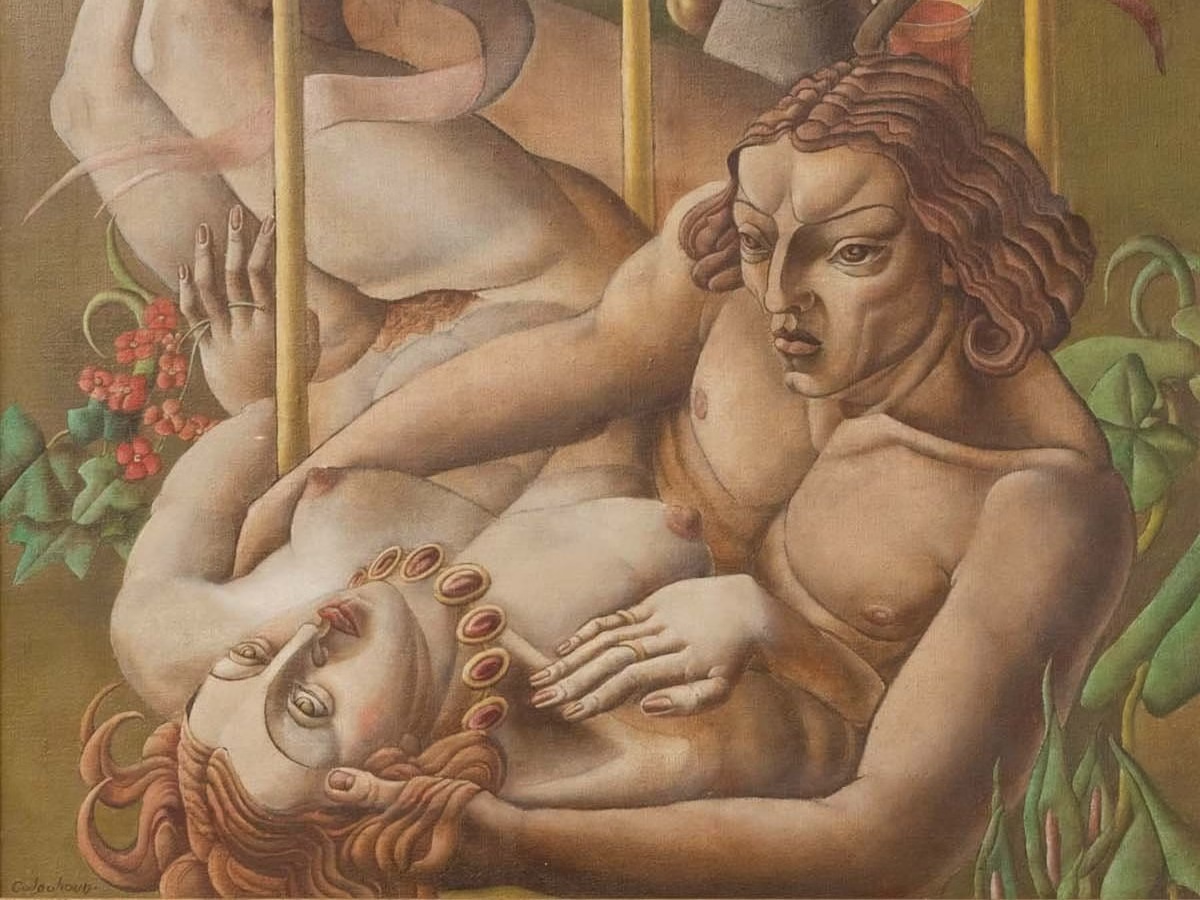
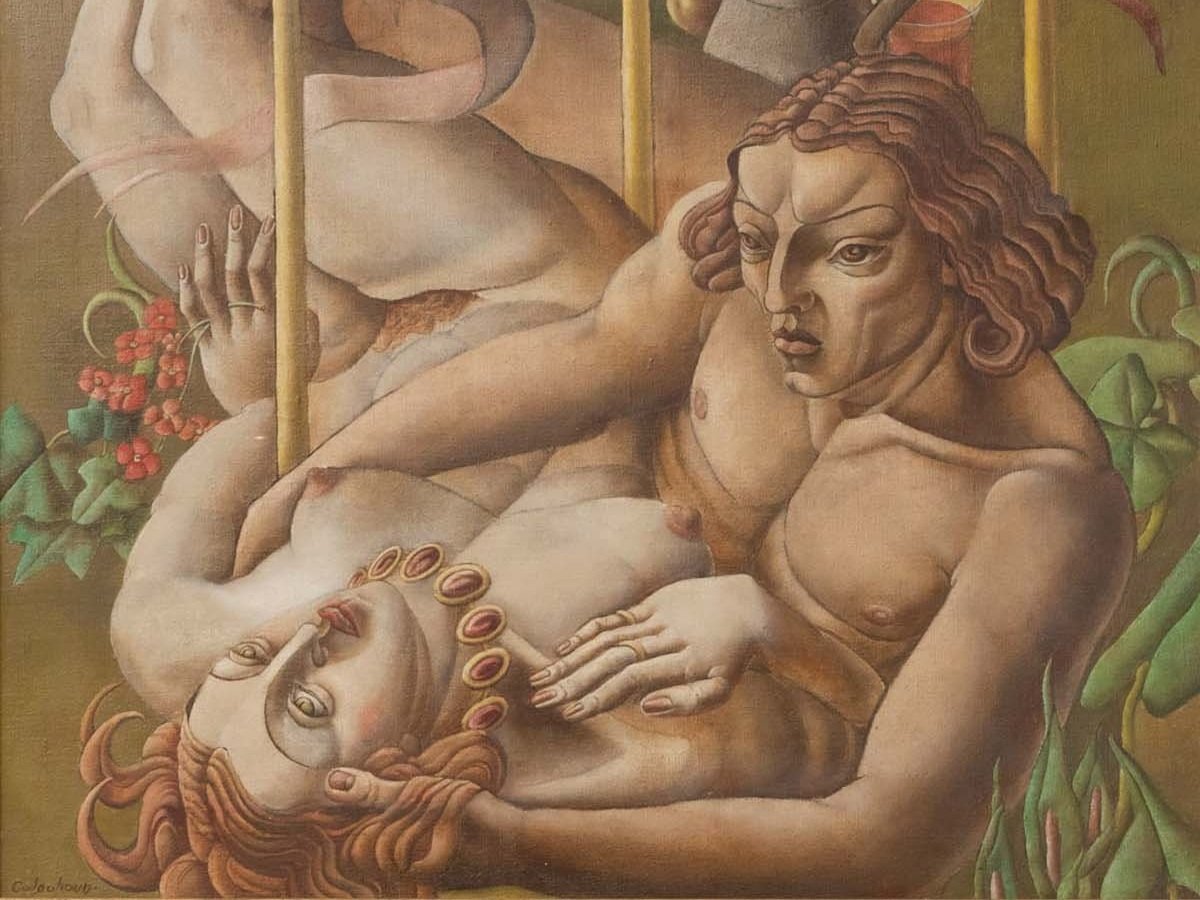
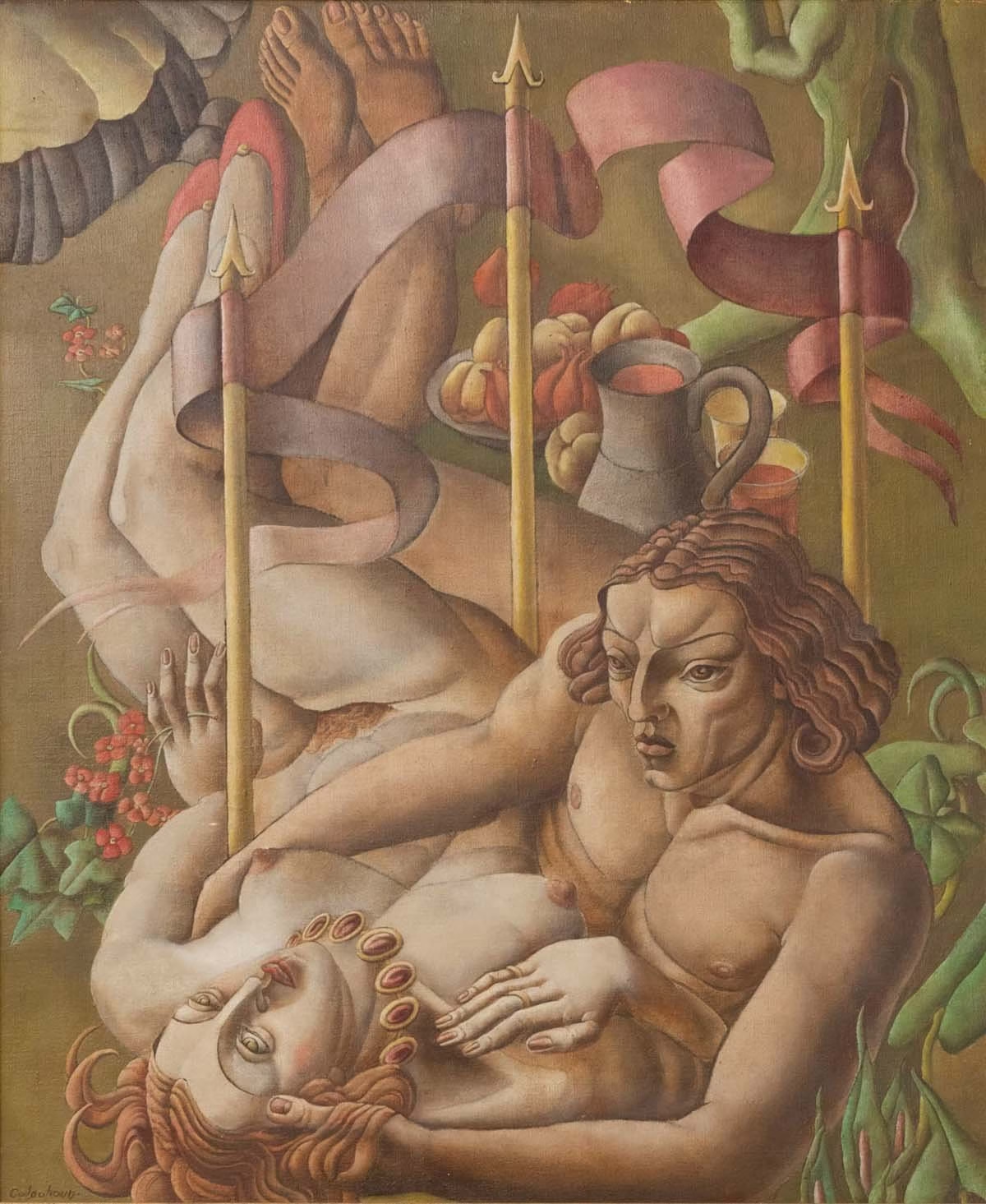
      Ithell Colquhoun, ‘Song of Songs’    via Unit London
    Ithell Colquhoun, ‘Song of Songs’ via Unit London

    Can the inner healer mend a broken relationship?

    Next up for MAPS therapy program designers Dr Michael Meithofer and his wife Annie AKA ‘Annie and Michael’ in spacespeak, is MDMA for couples’ counselling.

    “We knew that MDMA was useful for communication… and some of the other anecdotal things about it,” Annie told none other than Professor David Nutt on the Drug Science podcast (where you can hear Dr Nutt, the David Attenborough of drugs, a UK national treasure say ‘Back to the show!’)

    Annie collaborated on the initial research for a new era in MDMA couples’ therapy with Toronto’s Dr Anne Wagner. The Remedy clinic director has come up during further investigations into juicy subjects two weeks in a row (sync). Last week it was in a call for further research into psychedelic treatment for borderline personality disorder (BPD).

    Yet Dr Wagner is not the only intrepid sailor of the soul cooking up excellent experiments using ecstasy. John Hopkins’ university neuroscience department, not to be outdone, gave E to octopuses. They’d noticed ‘that octopuses and humans had nearly identical genomic codes for the transporter that binds the neurotransmitter serotonin to the neuron’s membrane.’

    The California double-spot octopus is a solitary creature, barely interacting with others of its kind besides once a year, briefly, for mating. Even then the male uses a sex arm and it looks like mid-air refuelling. 

    Would you believe though, that when researchers put the octopuses ‘in a beaker containing a liquified version of the drug’ according to National Geographic, they exhibited significantly more social behaviour?

    ‘Particularly telling, said scientist Gul Dolen, was that after being returned to their tanks at Woods Hole Oceanographic Institute in Massachusetts, the octopuses went on to reproduce.’ 

    During the Q&A after Annie and Michael’s lecture the pair were asked about giving MDMA to animals. After all, dogs are given anti-depressants. When I got my own chance to talk to them, I celebrated group ceremonial use of the ecstasy sacrament in the form of our rave culture then made a bad taste joke about giving MDMA to our pets hadn’t gone nearly as well. Now we know to shove them in a beaker of it.

    ’At no point did the octopuses ink, which would be a sign of stress,’ Dr Dolan told Nat Geo in response to all of our ethical concerns.